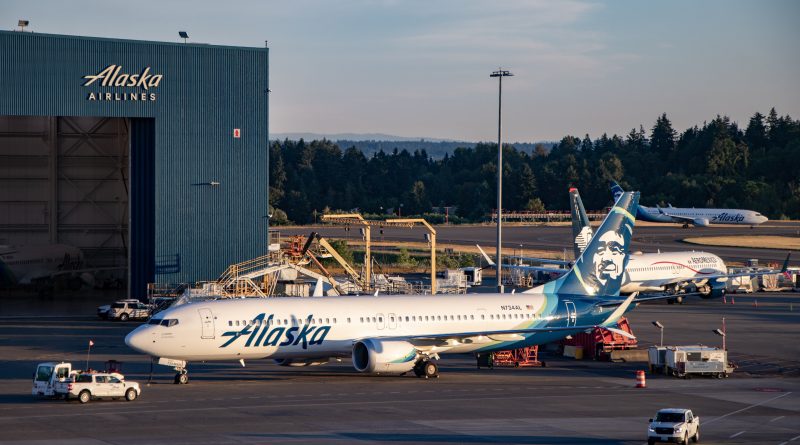
Alaska Airlines deepens Portland bet with $135 million hangar
Subscribe to our free newsletter today to keep up to date with the latest transportation and logistics news.
Alaska Airlines’ decision to invest $135 million in a new maintenance hangar at Portland International Airport reflects a calculated move to reinforce its position along the US West Coast. While the headline figure signals capital commitment, the deeper story lies in how airlines are rethinking infrastructure as a lever for operational control, cost management and long-term resilience.
Why Portland is becoming central to Alaska Airlines’ network strategy
Portland has steadily evolved into one of Alaska Airlines’ most important operational bases. The airline controls roughly 40 percent of traffic at the airport and serves more than 60 nonstop destinations from the city. That scale positions Portland as more than a supporting node. It functions as a hybrid hub that supports both regional connectivity and transcontinental routes.
The decision to expand maintenance capacity in Portland aligns with this role. Airlines typically prioritize maintenance, repair and overhaul facilities in locations where fleet density justifies the investment. With nearly 3,000 employees already based in the region, Alaska Airlines is building on an established ecosystem rather than creating a new one.
This approach reflects a broader industry shift. Carriers are consolidating operations in fewer, more capable hubs to reduce fragmentation across their networks. Concentrated infrastructure supports more efficient resource allocation, faster operational decisions and more predictable performance across fleets.
The Portland investment also strengthens Alaska Airlines’ competitive position against other West Coast carriers. As congestion and operating costs increase in major gateways such as Seattle and Los Angeles, secondary hubs with strong passenger volumes and expansion potential are gaining importance.
The economic footprint of a $135 million aviation project
Large-scale aviation infrastructure projects generate layered economic effects, and the Portland hangar is no exception. Construction is expected to create around 200 jobs, while the completed facility will support more than 100 permanent roles. These figures highlight the dual-phase impact typical of maintenance investments, where short-term construction activity transitions into long-term employment.
The project is projected to generate millions in state and local tax revenue during construction and on an ongoing basis once operational. For regional authorities, these returns support decisions tied to airport development and land use.
Beyond direct employment, the hangar will stimulate adjacent sectors. Maintenance facilities rely on a network of suppliers, including parts manufacturers, logistics providers and specialized service firms. This creates a multiplier effect that extends economic benefits beyond the airport.
Portland International Airport itself plays a central role in this equation. Handling more than 18 million passengers annually and accounting for the majority of Oregon’s air travel, the airport functions as a key economic gateway. Investments that enhance its operational capacity influence tourism, trade and regional business activity.
How maintenance infrastructure shapes airline efficiency and resilience
At a technical level, the value of a maintenance hangar lies in its ability to reduce aircraft downtime. Every hour an aircraft spends out of service represents lost revenue and potential disruption across the network. By expanding in-house maintenance capacity, Alaska Airlines gains greater control over scheduling, diagnostics and repair timelines.
The new facility is expected to improve turnaround times and support faster recovery from operational disruptions. This capability has become more important as airlines operate tighter schedules and higher load factors while facing increased exposure to external disruptions such as weather and supply chain delays.
Integration with existing facilities, including those operated by Horizon Air, adds another layer of efficiency. Shared infrastructure and expertise allow for more flexible allocation of maintenance tasks across fleets, reducing bottlenecks and improving utilization rates.
From a strategic perspective, the investment supports fleet modernization efforts. As airlines introduce newer aircraft types, maintenance requirements evolve. Purpose-built facilities allow carriers to adapt more quickly, ensuring technical capabilities align with fleet composition.
What Alaska Airlines’ investment signals for the future of aviation infrastructure
The Portland hangar project reflects a broader shift toward airline-led infrastructure investment. Rather than relying solely on third-party providers, carriers are bringing critical functions in-house to maintain tighter control over performance and costs.
This shift is driven by the growing complexity of airline operations. Modern fleets, digital maintenance systems and real-time data analytics require infrastructure that supports advanced workflows. Standard facilities often fall short, pushing airlines toward tailored solutions.
Demand for maintenance, repair and overhaul services is expected to rise as global fleets expand and age. Airlines that invest early in maintenance capacity are better positioned to manage demand internally, reducing reliance on external providers and limiting exposure to market volatility.
For Alaska Airlines, the Portland investment is less about immediate capacity needs and more about long-term positioning. It reinforces the airline’s commitment to the region, strengthens its operational backbone and provides a foundation for future growth.
In a sector where margins remain tight and disruptions can escalate quickly, infrastructure decisions carry strategic weight. The hangar is a physical asset, but its impact extends into network reliability, cost structure and competitive positioning across the West Coast.
Sources