Amazon’s 30-minute delivery push could reshape retail logistics
Subscribe to our free newsletter today to keep up to date with the latest transportation and logistics news.
Amazon has spent more than two decades conditioning consumers to expect faster delivery. Two-day shipping became next-day shipping. Next-day shipping became same-day fulfillment. Now the company is testing whether consumers are willing to pay a premium for household essentials delivered in less than 30 minutes.
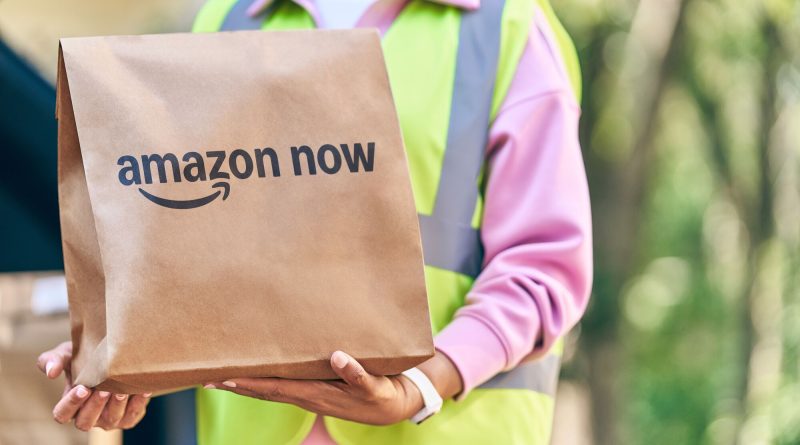
The launch of Amazon Now marks another escalation in the retail industry’s race toward immediacy. The service offers thousands of products, including groceries, snacks, household items and personal care products, through a network of smaller fulfillment sites positioned close to densely populated neighborhoods. Prime members currently pay $3.99 per order, while non-members pay $13.99.
The program is rolling out across Atlanta, Dallas-Fort Worth, Philadelphia and Seattle, with expansion planned for more US cities. Amazon’s timing reflects broader changes in consumer behavior. Shoppers increasingly treat e-commerce less as a scheduled purchasing channel and more as an on-demand utility. That shift has already reshaped grocery delivery, restaurant delivery and pharmacy fulfillment. Amazon is now attempting to consolidate those expectations into its broader retail ecosystem.
Retail analysts view the move as part of a larger competitive battle involving Walmart, DoorDash, Uber Eats and Instacart. Delivery speed has become one of the few remaining ways major retailers can distinguish themselves in a market where pricing and product selection are increasingly commoditized.
How Amazon built a delivery network designed for immediacy
The operational model behind Amazon Now differs from the company’s traditional fulfillment network. Standard Amazon warehouses are optimized for scale and national distribution. Ultra-fast delivery requires inventory to sit much closer to consumers, often inside smaller urban facilities capable of dispatching orders within minutes.
That creates a fundamentally different logistics challenge. Retailers must predict local purchasing behavior with far greater precision because warehouse space becomes more constrained as facilities move closer to cities. A suburban fulfillment center can carry hundreds of thousands of items. A compact urban node may only stock products with extremely high purchasing frequency.
Amazon appears to be focusing heavily on recurring consumer staples. Grocery items, cleaning products, snacks and over-the-counter medications represent categories where urgency frequently overrides price sensitivity. The company has already stated that essentials account for a significant portion of daily purchases in some markets.
The service also reflects Amazon’s growing investment in regionalized inventory systems. Over the past several years, the company has quietly redesigned parts of its logistics infrastructure to reduce the distance products travel before reaching customers. Shorter travel routes improve delivery times while reducing transportation costs per package.
The challenge is maintaining operational efficiency while compressing delivery windows. Delivering a package within 30 minutes requires tighter coordination between inventory systems, drivers, routing software and consumer demand forecasts. A small disruption, including traffic congestion or inaccurate inventory placement, can quickly undermine delivery promises.
Retailers pursuing similar strategies have faced profitability concerns for years. Fast delivery often increases labor costs, creates inefficient routing patterns and reduces the number of orders drivers can complete per hour. Amazon’s scale may provide some insulation from those pressures, but the economics remain difficult.
Why the economics of ultra-fast delivery remain difficult
Rapid delivery services tend to attract strong consumer interest but inconsistent long-term profitability. The cost structure becomes especially challenging when average order values remain relatively low.
A customer ordering toothpaste, paper towels and ice cream may generate limited revenue compared with the operational expense required to fulfill and deliver the order within half an hour. That dynamic partly explains Amazon’s delivery fees for the service, even among Prime subscribers.
The broader retail sector has wrestled with similar problems. Instacart benefited from pandemic-era demand spikes but later faced slowing order growth and margin pressure. DoorDash expanded aggressively into grocery and convenience delivery while continuing to navigate profitability concerns. Walmart has invested heavily in same-day fulfillment through stores functioning as local distribution hubs.
Amazon’s advantage lies in the breadth of its ecosystem. The company can potentially treat rapid delivery as a retention tool rather than a standalone profit center. Faster fulfillment may encourage consumers to consolidate more spending within Amazon’s platform, increasing overall customer lifetime value.
That strategy could place additional pressure on traditional retailers already struggling with fulfillment costs. Many regional chains lack the infrastructure or order volume necessary to support ultra-fast delivery at scale. Smaller competitors may increasingly rely on third-party logistics platforms or marketplace partnerships to remain competitive.
Questions also remain around labor sustainability. Faster delivery windows create operational intensity across warehouses and driver networks. Retail and logistics companies continue facing scrutiny around worker productivity expectations, particularly as consumers become accustomed to near-instant fulfillment.
What Amazon Now means for the future of retail logistics
Amazon Now signals a broader transition within e-commerce from convenience toward immediacy. The distinction matters because it changes how retailers structure supply chains, inventory placement and customer relationships.
Traditional retail logistics prioritized efficiency and scale. The emerging model prioritizes proximity and responsiveness. Products increasingly move closer to consumers before purchases even occur. Retailers are effectively pre-positioning inventory based on predictive demand models.
That shift may reshape urban logistics over the next decade. More retailers could invest in micro-fulfillment facilities located near population centers. Commercial real estate patterns may change as demand grows for smaller distribution sites positioned inside cities rather than on distant industrial outskirts.
Consumer expectations are also likely to evolve further. Once rapid fulfillment becomes normalized, delivery speed itself may stop functioning as a premium feature. Instead, it may become another baseline expectation similar to free shipping.
The larger question is whether shoppers consistently value speed enough to justify the operational complexity behind it. Consumers embraced same-day delivery once it became broadly available. Thirty-minute delivery represents a more ambitious promise, particularly outside dense metropolitan markets.
Amazon appears willing to test that assumption aggressively. The company’s latest initiative suggests retail competition is no longer centered solely on what consumers buy online, but how little time passes before those purchases arrive at the front door.
Source
Photo credit