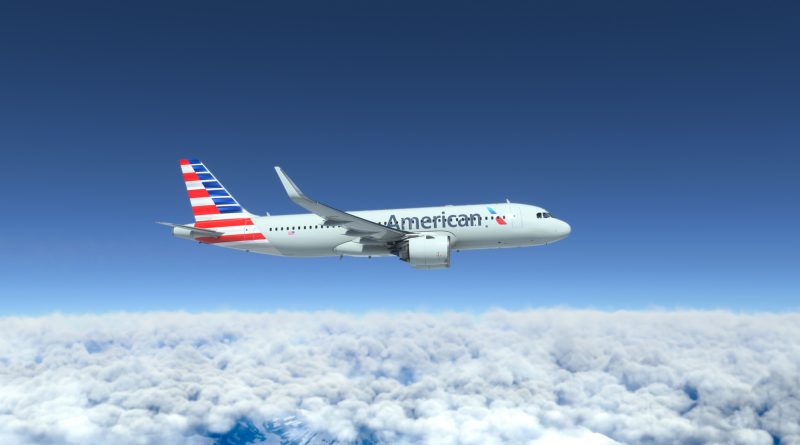
American Airlines turns to premium cabins in profit push
Subscribe to our free newsletter today to keep up to date with the latest transportation and logistics news.
American Airlines plans to devote more aircraft space to higher-paying passengers as it works to improve profitability and compete more closely with Delta Air Lines and United Airlines.
The carrier plans to increase premium seating to about 40% of seats on narrowbody departures in the coming years, up from about 25% today. It will also restore seatback entertainment screens across its narrowbody fleet, reversing an earlier strategy that relied more heavily on passengers using their own devices.
The commercial case is clear. Premium travelers accounted for about 30% of American’s seats in the second quarter of 2026 but generated nearly half of its ticketed revenue.
That gap between seat share and revenue share helps explain why American is willing to devote more cabin space to first class and Main Cabin Extra seats.
The decision also points to a wider shift in airline economics. Large US carriers are putting more focus on passengers who are willing to pay for extra space, comfort and a better onboard product.
For American, the question is whether a more premium cabin can produce the higher returns it needs.
Premium passengers are becoming more important to airline economics
Every aircraft has a fixed amount of cabin space, which forces airlines to decide how that space should be divided.
Adding more seats can increase capacity, but it can also limit room for products that command higher fares. Premium cabins work differently. They take up more space per passenger, but the revenue from each seat can be much higher.
American’s own figures show why that trade-off has become more attractive.
Premium seating accounts for about one-quarter of seats on narrowbody departures today. The airline plans to raise that share to around 40%. It is adding more first class seats as well as more Main Cabin Extra seats, which offer additional legroom and other benefits.
The move brings American closer to a strategy already established at Delta and United. Both carriers have invested heavily in premium cabins, lounges and loyalty products as they compete for business travelers and higher-spending leisure passengers.
That matters because the largest US airlines are no longer competing only on network size, ticket prices or flight frequency. The mix of seats inside each aircraft is becoming a larger part of the revenue model.
American also faces pressure because it continues to trail Delta and United in profitability. CEO Robert Isom has increased the airline’s focus on premium products as part of an effort to close that gap.
Increasing premium capacity does not guarantee higher profit. Larger seats reduce the number of passengers an aircraft can carry, while improved interiors add cost. Demand also needs to remain strong enough to support higher fares.
But American’s second-quarter revenue mix gives management a clear reason to pursue the strategy. When a minority of seats generates close to half of ticketed revenue, allocating more space to those customers becomes difficult to ignore.
American is reversing an earlier bet on the digital passenger
The return of seatback screens is almost as notable as the increase in premium seating.
American began moving away from built-in screens nearly a decade ago. The reasoning was simple. More passengers were carrying smartphones, tablets and laptops, so the airline could stream entertainment to personal devices instead of installing and maintaining screens at every seat.
That approach reduced the need for onboard hardware and reflected the direction consumer technology appeared to be taking.
American has now changed course.
New Airbus and Boeing narrowbody aircraft are expected to arrive with seatback displays from 2028. Existing aircraft will also be retrofitted. The airline expects the full installation to be completed early in the next decade.
American’s plans cover more than 800 single-aisle aircraft.
The new systems are expected to include 4K displays, Bluetooth audio connections and USB-C fast charging. American is also preparing to introduce high-speed Starlink Wi-Fi across much of its fleet.
The reversal offers a useful lesson for other industries investing in digital services.
Giving customers access through their own devices can reduce physical infrastructure, but it does not always improve the product. A passenger may prefer to work on a laptop while watching a movie on a separate screen. Families may not want to hand a phone to a child for an entire flight. Others may simply expect a built-in screen when paying a higher fare.
American’s new approach suggests personal devices and installed technology can meet different needs.
That becomes more important when airlines are trying to sell a more expensive experience. Higher fares bring higher expectations across the journey, including the seat, connectivity, entertainment and airport service.
Cabin investment will be judged by the profit it produces
American’s plan will take years to complete.
New aircraft with seatback screens are due from 2028, while existing narrowbody aircraft will be updated over time. The airline is also changing seating layouts across aircraft including the Airbus A319, A320 and A321neo. Future Boeing 737 MAX 10 aircraft are expected to have 24 first class seats.
That schedule creates a long gap between announcing the strategy and seeing its full financial effect.
It also gives American’s competitors time to keep investing.
Delta has long used seatback entertainment as part of its passenger product, while United is also expanding its premium offer. American is therefore moving toward a market position that its two main rivals have spent years developing.
The main test will be whether the airline can turn the investment into higher fares, stronger loyalty and better margins.
Seatback screens may attract much of the passenger attention because their return is easy to see. The larger change is taking place in the cabin layout.
American is choosing to give a much larger share of its narrowbody aircraft to seats that can generate more revenue per passenger. That decision says more about the future of its business model than the screens themselves.
If premium demand remains strong, aircraft interiors could become an even more important source of earnings across the US airline industry. American now needs to show that its new cabin mix can help close the financial gap with its more profitable rivals.
Source