Announcing its first transatlantic route in 18 years, Cardiff Airport opens the runway to new opportunities
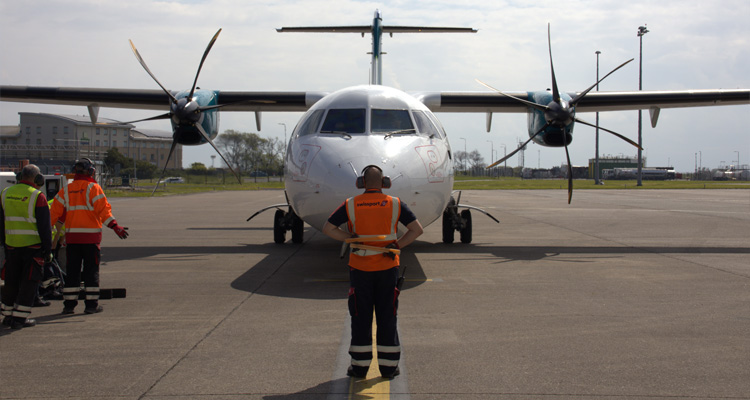
As Wales’ only international airport offering both commercial passenger and cargo services, Cardiff Airport plays a pivotal role in connecting businesses to global markets. Located just southwest of Cardiff city center, the airport strategically combines the agility of a regional gateway with the capabilities of a major aviation hub. Owned by the Welsh Government and operated as a commercial business, Cardiff Airport continues to expand its international reach, with destinations spanning Europe, North America, the Caribbean and beyond – including the recent addition of direct flights to Toronto, Canada. Open 24 hours a day with no operational constraints and boasting a 2,354-metre runway, the airport also offers exceptional facilities for general aviation training, reinforcing its position as a vital asset for Wales’ economy, aviation sector, and business community.
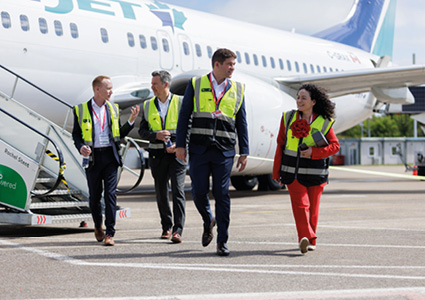
Jon Bridge, Cardiff Airport’s Chief Executive Officer, joined the organization following an extensive career in HR and consulting. Having frequented the airport as a child, he brings decades of passion and experience to his role and is keen to guide Cardiff Airport into a new era of continued growth and success.
“Cardiff Airport opened in 1942, initially as an RAF training base for Spitfire pilots during the Second World War. The airport then rapidly expanded from the 1960s with significant investments made into the terminal, runway, and air traffic control facilities,” Jon begins, sharing some insight into the airport’s history and evolution.
“Over the years, it has really become the country’s gateway to Wales; it contributes around £200 million to the Welsh economy each year and supports thousands of jobs. It’s a principal airport supporting business, leisure, and aerospace growth, owned by the Welsh Government since 2013 with the British Airways Maintenance Center onsite. Right now, we’re on a major growth trajectory. We recently hit our milestone of one million passengers coming through annually and are the second fastest growing airport in the UK for the first quarter of 2026. There’s good airline confidence in the airport: Ryanair is now operating its largest ever Cardiff program and TUI have now based a fourth aircraft here.”
Now, Cardiff Airport is embarking on a new era. Ambitious about positioning itself as the primary air cargo hub in the West, the organization has invested in the infrastructure, operational flexibility and commercial capabilities needed to support long-term expansion across multiple sectors. From passenger services to cargo operations and aviation support, the airport’s unique combination of capacity and accessibility offers major strategic advantages for passengers and businesses alike.
“We’re open 24/7, 365 days a year, and our capacity for wide-body aircraft positions us as a natural hub for freight services,” Jon elaborates. “We provide real, trusted cargo handling capability through our relationship with Swissport. We’re a code 4E aerodrome with zero slot constraints, so we regularly handle large aircraft movements, and have a large acreage of land that could lend itself for further developments into being an air cargo hub.”

Building on this momentum, Cardiff Airport has delivered a series of major infrastructure upgrades in recent years – part of a wider £205 million investment program designed to enhance operational resilience, improve passenger experience and create the capacity needed for future growth. These developments are laying the foundations for the airport’s next phase of expansion.
“We’ve just completed the resurfacing of our runway – our first one in over 20 years – which has been a significant infrastructural investment for us. Also on the runway, we’ve moved away from halogen technology to modern LED lighting across the airfield, which has helped to enhance safety and visibility, while reducing maintenance requirements over the longer term,” Jon reveals. “One of our other improvements has been in the introduction of next-gen security. We’ve now got state-of-the-art technology that allows our passengers to leave liquids and electronics in their cabin bags, which has significantly improved the security screening process and reduced queue times.”
In other exciting developments, the airport was proud to announce a major milestone in its trajectory: the introduction of its brand-new transatlantic route to Toronto, Canada. More than simply adding a new destination, the Toronto service represents a major step forward in the airport’s long-term growth strategy and commitment to creating new opportunities for passengers and the wider Welsh economy, further strengthening Wales’ international connectivity.
“The Toronto route is a significant milestone for the airport; it’s our first transatlantic route in 18 years. It really does deliver a strong vote of confidence in the market from our airline partners in showcasing our capabilities,” Jon enthuses. “It demonstrates the growing demand for international connectivity from Wales and aligns with our ambition to provide passengers with greater choice. Hopefully, this is the first of many additional international routes.”
Working in tandem with the organization’s expansion, Cardiff Airport’s operational strengths are further complemented by the nearby St. Athan Aerodrome, located just a short drive away from the airport in the Vale of Glamorgan. The close relationship between Cardiff Airport and St. Athan Aerodrome strengthens the region’s aviation offering, creating a complementary network of infrastructure and expertise. While the airport serves as Wales’ principal international gateway, St. Athan enhances the wider aviation landscape by providing specialist facilities and operational capabilities that support both current industry needs and future innovation.
“The St. Athan aerodrome is an important part of the wider aviation ecosystem within South Wales, and we’re responsible for operating the aerodrome safely and efficiently,” Jon explains. “St. Athan provides critical infrastructure for other notable aerospace companies, as well as additional capacity and flexibility for maintenance, engineering, aircraft storage, and specialist aviation operations. This kind of aviation ecosystem also offers us the opportunities to support the development and deployment of future aviation technologies, such as sustainable aviation fuels, hydrogen, electric aircraft initiatives, etcetera. It plays an important role in supporting Wales’ ambition to be at the forefront of aviation innovation and decarbonization.”
With ambitious growth plans, significant infrastructure investment, and a clear vision for the future, Cardiff Airport is strengthening its position as a key driver of Wales’ connectivity and economic prosperity. From expanding international routes and cargo capabilities to supporting innovation through its partnership with St. Athan Aerodrome, the airport is building a resilient and forward-looking aviation ecosystem. As passenger numbers continue to rise and new opportunities emerge, Cardiff Airport is well-positioned to serve as Wales’ gateway to the world for decades to come.
“The key message that I’d like to get across is that Cardiff Airport is open for business,” Jon concludes, optimistic for the years ahead. “We’re on an exciting growth journey, with a real focus on cargo opportunities to complement passenger growth. I’d like to thank our teams for their continued dedication and professionalism. We’ve got some amazing people working across Cardiff Airport and St Athan, and I’m really looking forward to the journey ahead.”