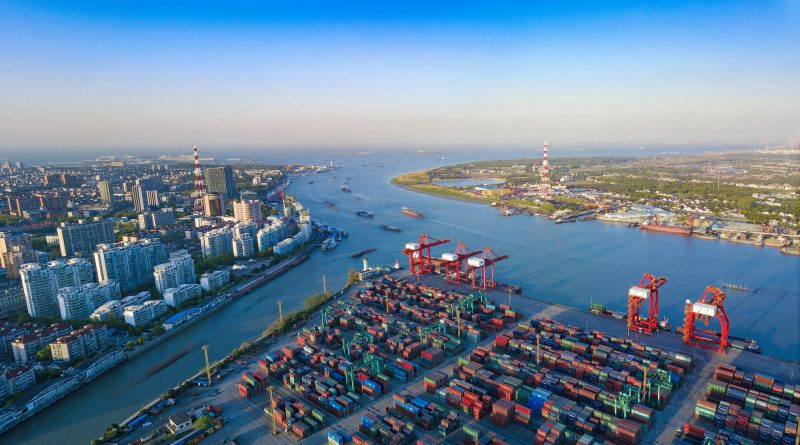
Asian port backlogs leave shippers facing a difficult 2027
Subscribe to our free newsletter today to keep up to date with the latest transportation and logistics news.
Congestion at major Asian container ports could remain a problem well into 2027 as delays remove millions of TEU of effective capacity from the global shipping network.
Sea-Intelligence estimates that 8.5% of the global containership fleet is being absorbed by delays. That is equal to about 3 million TEU of capacity. Based on recovery patterns after earlier disruptions, the analyst estimates it could take seven to 10 months for congestion to return to the lower levels recorded in June 2025.
That timeline would extend the impact beyond the current peak shipping period and into the Chinese New Year rush in early 2027.
The disruption is also spreading beyond ports directly affected by bad weather. Carriers have responded to congestion by omitting port calls and changing schedules. Those moves can shift containers and vessel arrivals to other ports, putting more pressure on transshipment hubs across Southeast Asia and the Indian subcontinent.
For manufacturers, retailers and other major shippers, the issue extends beyond longer waiting times at individual ports. Persistent congestion can reduce usable shipping capacity, weaken schedule reliability and make freight budgets harder to set.
Repeated disruptions are spreading delays across Asian ports
A series of typhoons has added to pressure at major container gateways since mid-2026.
Freightos reported that repeated storms prevented some ports from clearing existing backlogs before further shutdowns occurred. At one stage, as many as 90 ships were waiting more than a week for a slot in Shanghai.
Carriers have responded in part by skipping congested ports. This can reduce delays for individual vessels, but the containers still need to move through the regional network. Extra volumes can then arrive at other terminals that were not prepared for them.
Sea-Intelligence reported that global container schedule reliability fell 6.1 percentage points in July to 56.4%. It was the largest monthly decline since January 2021. The average delay for vessels arriving late increased to 6.06 days.
Performance fell at all 14 of the busiest Asian ports tracked by the company.
Only 21% of container vessels arrived on schedule in Shanghai in July, down 19.2 percentage points from the previous month. Ningbo recorded reliability of 34.6%, while Singapore stood at 43.2%. Port Klang recorded 33.3% and Busan 40.9%.
Sea-Intelligence said Shanghai had not recorded schedule reliability at such a low level outside the severe pandemic disruption seen during the 14 years covered by its data.
The figures show why congestion can continue after the original disruption has passed. A port may reopen after bad weather, but vessels arriving close together still need berth space. Containers may also be out of position, while later services enter a network that is already running behind schedule.
Delays can then spread along the route.
Congestion is reducing usable shipping capacity
The size of the global container fleet does not show how much capacity is available to shippers at any given time.
A vessel waiting outside a port remains part of the fleet, but it cannot move cargo at its normal rate. As more ships spend extra time waiting for berths, the amount of effective capacity available across the network falls.
This helps explain why port congestion can support higher freight rates even as new ships enter service.
The rate picture differs by trade lane. However, prices on routes from the Far East to the US remained high in late September.
Xeneta put the average spot rate from the Far East to the US West Coast at $8,255 per FEU on Sept. 24. The equivalent rate to the US East Coast stood at $11,445 per FEU.
The West Coast figure was 18% higher than on July 1, while East Coast rates had risen 31%.
Port congestion is only one factor affecting those prices. Carrier capacity decisions, cargo demand and wider shipping disruption also influence rates. Delays can still make those pressures harder to absorb because part of the nominal fleet is tied up waiting.
This distinction matters for shippers assessing whether new vessel deliveries will ease the market. Fleet growth may increase total capacity, but its commercial value depends on how efficiently those ships can move through ports.
Shippers may need to plan for disruption well into 2027
The timing of the current congestion creates another problem for shippers.
Asia’s Golden Week period can interrupt production and shipping schedules. The months before Chinese New Year can then bring another rise in export activity as companies move goods before factory closures.
If Sea-Intelligence’s seven to 10-month normalization estimate proves accurate, current delays could overlap with those seasonal pressures.
That has implications for businesses preparing 2027 freight tenders. Xeneta said in September that shippers entering contract negotiations cannot assume current market conditions will disappear quickly. Companies may instead need to assess individual sources of disruption against their transport needs and expected volumes.
Procurement and logistics teams may therefore need to allow more time in their shipping schedules. Businesses with time-sensitive cargo may need larger buffers between planned departure and required delivery dates. Companies that rely on transshipment services may also need to monitor secondary hubs rather than focusing only on their main port of origin.
With a large share of global containership capacity already caught in delays, the speed at which Asian ports clear those backlogs will help determine how much effective shipping capacity is available as businesses enter 2027.
Source:
SplashPorts