Carl Hanson on translating sustainability ambition into action across logistics
The logistics sector has reached a critical juncture. A decade of challenges – Brexit, the Covid-19 pandemic, geopolitical crises, increased cost pressures, and rapid technological developments – have piled pressure on businesses. Add a driver shortage and shrinking capacity to the mix, and these challenges have prompted a renewed focus on resilience.
But this pressure is being exacerbated further by a long-standing, competing demand: sustainability and the ongoing need for decarbonization.
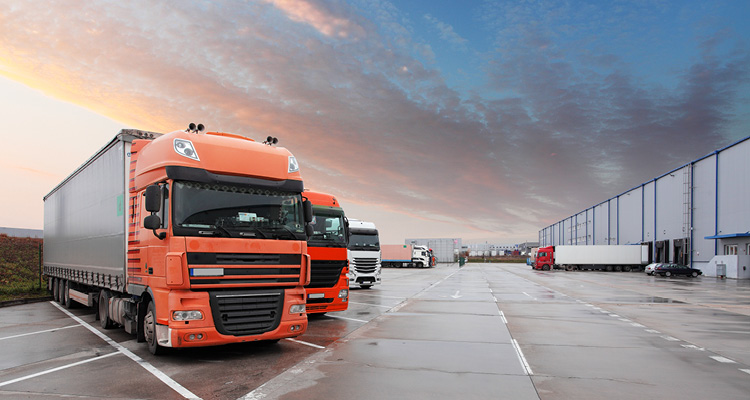
Transport is a vital industry, but it’s also a significant contributor to emissions. Domestic transport, including emissions from road vehicles, trains, domestic aviation, and shipping and railways, is now responsible for 31 percent of the UK’s greenhouse gas emissions. Businesses undoubtedly recognize the need to improve their environmental performance in this area yet cost pressures and a demanding market have understandably made it difficult to maintain the focus.
How can businesses reconcile two, on the surface, seemingly very different goals? The answer, perhaps, is that they are not all that different at all.
GXO’s new insights report, The Future of Transport, explores the tension between these demands, and highlights how organizations can unlock efficiency, improve performance, and build long-term resilience while still supporting the transition to Net Zero.
Why there’s a gap between ambition and action
The ambition is clear: GXO’s exclusive survey of over 1000 UK transport and logistics professionals finds that 87 percent of operators now rank emissions reduction as a priority.
So, why are they still struggling to act? Two major roadblocks stand in the way: economic pressure and organizational capability.
A challenging operating environment sees 89 percent expecting costs to rise this year and over half (52 percent) locked into purely cost-driven logistics decisions. Emissions goals often stumble on financial pressure before gaining steam.
Many organizations also lack the know-how to act. Almost two-thirds (64 percent) admit they don’t know where to start on emissions, up from 59 percent in 2024, proof that appetite to improve is growing faster than the ability to act on it.
Persistent structural barriers – blocks to technology integration, a lack of in-house expertise, and internal resistance to change – inhibit the ability to turn that ambition into practice. None of these are cost or emissions barriers in isolation. They block both simultaneously, which is why solving one without the other rarely works.
Promisingly, the businesses successfully addressing this tension head-on aren’t just the ones with the biggest budgets. Rather, they’re the operators who have stopped treating cost and carbon as two separate demands and started treating them as the same investment in the business’s future.
Everything starts with visibility
Without visibility of the issue, ambition is redundant – no one can close a gap they can’t see. This is a key area where the right technology can help.
For example, GXO’s insight report finds a lack of optimization technology drives 37 percent higher maintenance costs, 32 percent longer delivery times, and 32 percent higher CO₂ emissions. Those numbers point to a simultaneous cost and carbon challenge.

The starting point is to learn exactly where inefficiency exists, such as underutilized fleet capacity or suboptimal routing, then quantifying each one directly in financial and operational outcomes.
The data finds that 85 percent of businesses have increased fleet optimization investment in the last year. These efforts may have been driven by the need to manage costs and drive efficiencies, but they also put these organizations in a strong position for the longer-term transition away from diesel.
Real-time visibility tools are built to do exactly that, pulling data into one place so planning, optimization, and fleet management can address real issues in real time. It also opens possibilities around collaboration by aligning subcontractor procurement, management, and compliance. Access to a network of scale will increasingly shape how the sector hits its targets.
This is the groundwork businesses need before they can properly drive the transition to alternative fuel vehicles: enhance efficiencies now, since the tools already exist, and build a long-term road map for fuel transition on solid foundations.
Making the switch to AVs
Nowhere is the distance between ambition and action wider than around alternative fuels.
Only 35 percent of operators strongly agree they have a clear strategy and timeline for alternative fuel HGV adoption. This is hardly surprising given the uncertainty that remains about where exactly network operators should place their alternative fuel bets, or the complexity and expense of the infrastructure upgrades required to support them.
This is also where a trusted 3PL partner earns its place. Rather than carrying the cost and risk of an alternative fuel transition alone, in-house operations can access new vehicle technologies and specialist expertise at pace. It turns a strategy operators can’t yet afford into one they can act on today.
The research suggests operators no longer view transport purely as a cost center, but as a strategic lever for performance. To deliver on this, businesses that use a data-led approach to identify and rectify inefficiency precisely are the ones best placed to unlock strong returns on both cost and carbon.
It may feel like we’re stuck in the middle of a longer-term transition, but competitive advantages, cost efficiencies, and the move toward a lower carbon economy don’t have to be separate challenges. With the right approach, they can be a joint one.
Discover more about The Future of Transport at GXO by downloading part one of the insights paper.
Carl Hanson
www.gxo.com
Carl Hanson is Managing Director, Transport, at GXO in the UK and Ireland. Prior to GXO, Carl led transport at Wincanton where he also managed various group functions including fleet, property, and procurement. Under his leadership, the group experienced business growth, substantial savings, and operational improvements across a ten-year period.