
East Midlands Airport is the UK’s busiest express air cargo hub, and it is just getting started
Located in the heart of England, East Midlands Airport connects over four million passengers to more than 70 destinations each year, serving travellers from across the UK with strong road and public transport links that make it one of the most accessible airports in the country. But it is the airport’s cargo operations that truly set it apart. As the UK’s largest dedicated cargo airport, East Midlands plays a key role in global express freight, acting as a vital gateway between the UK and some of the world’s most important markets while supporting the growth of high-value industries across the country. Its stellar reputation has been built on operational efficiency, exceptional connectivity and a consistent ability to attract major global operators, namely UPS and DHL. With an ambitious investment program currently underway, the airport is poised to become even more instrumental in driving UK trade forward. We learn more about the aspects this investment program addresses from Steve Griffiths, Managing Director at East Midlands Airport.
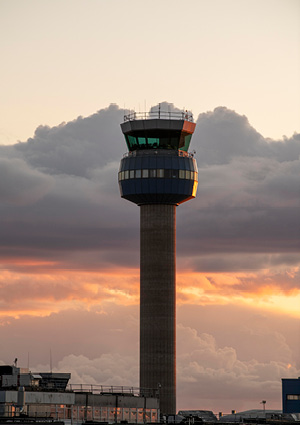
“Last year, we celebrated 60 years of the airport’s operations,” he begins. “The airport started as an RAF facility and came into commercial operations in 1965, handling both passenger and cargo services. Six decades ago, we were seeing about 115,000 passengers and 358 tons of cargo pass through annually. Fast forward to today, and we see four million passengers and more than 400,000 tons of cargo a year. Located in the Golden Triangle, the airport has strong connectivity to the M1, linking the North, East, South and West, and serves a passenger catchment of eight million people within an hour of our doors. There are two strategic dimensions to East Midlands Airport: passenger operations by day and international logistics operations by night.”
That dual identity has positioned East Midlands Airport as one of the UK’s most significant logistics hubs, and as of early 2026, the airport has been experiencing considerable growth. In particular, its cargo operations are very well-established. It is home to two major global integrators, DHL and UPS, both of which have invested in dedicated logistics hubs on site, connecting into their European and international networks. FedEx and Swissport also operate there, alongside a number of third-party logistics facility operators. Looking ahead, there is further scope for growth, with YunExpress having recently developed and opened a new cargo handling facility and others poised to begin operations at the airport. YunExpress is set to handle its first flight on the 30th of April. These anchor operators in turn attract additional airlines to base their cargo operations at the airport, drawn by the ground handling capabilities already in place. Over the past year alone, seven new dedicated cargo operators have chosen East Midlands Airport, including Hong Kong Cargo, Atlas Air, Ethiopian Cargo, Saudi Cargo, Etihad, SF Express and Central Airlines.
To build on this momentum, East Midlands Airport has developed a significant five-year investment plan currently underway. Steve explains what it entails from both a cargo and passenger perspective. “In May 2025 at UKREiiF, we launched our cargo master plan for growth, positioning ourselves boldly and clearly in the market as a UK airport that is serious about cargo and has a concrete plan to grow it. The plan identified four key development sites on the airport ideal for further cargo investment, giving operators the opportunity to establish and expand their hubs here. In total, it spans over 50 hectares of development space, including new taxiways, aprons and 18 new aircraft stands. This was also underpinned by a study we conducted the previous year, which identified that East Midlands Airport could potentially grow by 54 percent over the next 20 years, driven particularly by the rise of express freight and e-commerce. The demand for time-critical, high-value freight and e-commerce is only going up, and we are well placed to meet it with our dedicated freighter expertise.
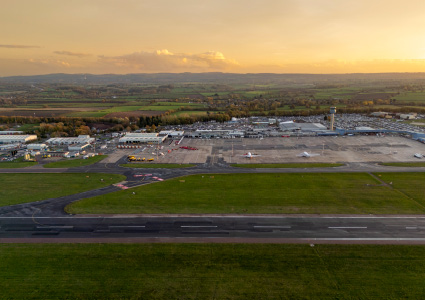
“On the passenger side, we are now in year three of a £120 million investment program focused on the customer journey, with the goal of effortless travel. We have a brand-new security hall equipped with next-generation security scanners and 3D scanners regulated by the Department for Transport, bringing a completely new look and feel to that part of the experience.
“Furthermore, we have invested in new restaurants and lounges, refurbished existing bars, kitchens and our pre-book lounge, and completed a reinvestment in our WHSmith one-stop shop. For children, we have installed an interactive play zone, and for those who need it, a new quiet room and a sensory pod. We have also added extra seating, improved Wi-Fi, enhanced car parking and introduced barrier-less drop-off technology to improve traffic flow and remove congestion at the airport entrance,” he explains.
Every one of those investments has been driven by customer feedback and a determination to remove any pain points from the passenger experience. Alongside these improvements, the airport is also a key stakeholder in the East Midlands Airport and Gateway Industrial Cluster (EMAGIC), a 160-hectare development designed to create a multimodal transport hub connecting air, road and rail, with a focus on decarbonization and job creation.
EMAGIC is also one of three sites forming part of East Midlands Freeport, of which East Midlands Airport is a founding member and port authority. This makes East Midlands Freeport the only inland freeport in the UK with road, rail and air connectivity. The Freeport designation covers a number of sites that offer both investment and tax incentives. Three of those sites sit within East Midlands Airport’s boundaries, two of which align directly with its cargo master plan, while the third is on adjacent land owned by the airport, giving it considerable influence over how that growth takes shape.
“We are working hard to grow the industry within this region, collaborating with regional mayors and other bodies to develop the industrial strategy while supporting the airport’s own growth. With the high concentration of manufacturing in the East Midlands and the connectivity we offer, we believe we are in a prime position to support that ambition,” Steve concludes.
East Midlands Airport stands as one of the UK’s most strategically important transport hubs. With the required infrastructure, operators and long-term plan now in place, the airport is set to operate at the scale it was always built for.