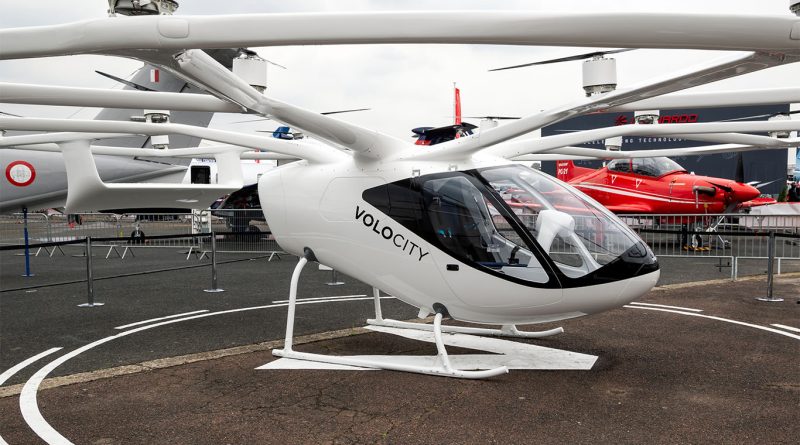
Electric air taxis move closer to reality after US approves pilot projects
Subscribe to our free newsletter today to keep up to date with the latest transportation and logistics news.
Electric air taxis could soon begin operating in several parts of the United States after the Department of Transportation approved a series of pilot projects designed to accelerate the introduction of next generation aircraft into national airspace.
The initiative represents one of the most significant steps yet toward commercial operations for electric vertical takeoff and landing aircraft, commonly known as eVTOLs. Federal officials say the program will help regulators understand how these aircraft can operate safely while allowing cities, transportation agencies and manufacturers to test infrastructure and operations in real world conditions.
The Department of Transportation confirmed that eight proposals were selected for the advanced air mobility and eVTOL integration pilot program. The initiative follows an executive order issued last year directing federal agencies to speed up the development and deployment of emerging aviation technologies.
More than 30 proposals were submitted by state transportation departments, aviation companies and regional authorities. The selected projects span more than two dozen states and will run over a three year period.
Testing air taxi operations in major cities
One of the most prominent projects involves a partnership between the Port Authority of New York and New Jersey and several developers of electric aircraft including Joby Aviation, Archer Aviation, Beta Technologies and Electra.aero.
The project will explore a variety of operational concepts in the New York region. Among the proposals is the possibility of operating passenger air taxi services from the Manhattan heliport, a site already used for helicopter transport within the city.
Urban air taxi services are being developed as a faster alternative to ground transportation in congested metropolitan areas. Electric aircraft could potentially reduce travel times between city centers and nearby airports or regional destinations.
State transportation departments in Texas, Pennsylvania and North Carolina also secured approval for pilot programs. Each will focus on different operational scenarios including passenger transport, regional mobility and cargo operations.
Federal regulators say the trials will help determine how advanced aircraft can safely integrate with existing aviation traffic and infrastructure.
“These partnerships will help us better understand how to safely and efficiently integrate these aircraft into the National Airspace System,” Federal Aviation Administration Deputy Administrator Chris Rocheleau said in a statement.
Industry prepares for commercial launch
For startups developing electric aircraft, the pilot program provides an opportunity to demonstrate their technology in operational environments before final regulatory certification.
Companies such as Joby Aviation and Archer Aviation have spent several years developing aircraft capable of vertical takeoff followed by forward flight using wings. The concept combines the flexibility of a helicopter with the efficiency of a small airplane.
Developers say electric propulsion systems could significantly reduce noise levels and emissions compared with conventional helicopters. Those advantages are considered essential if aircraft are to operate frequently in urban areas.
However the success of the industry will depend not only on aircraft certification but also on the creation of supporting infrastructure. Cities will need charging stations, landing facilities known as vertiports and new systems for managing low altitude air traffic.
The federal pilot program is intended to accelerate progress across these areas by allowing companies to work directly with state and local governments.
Officials also hope the projects will build familiarity with the technology among the public. Demonstration flights and operational trials could help communities understand how electric aircraft function and how they may fit into existing transportation systems.
Cargo and medical missions expected to lead early flights
Although passenger services attract the most attention, several pilot projects will initially focus on cargo and medical transport.
Beta Technologies is participating in seven of the eight selected proposals, making it one of the most heavily involved manufacturers in the program. The company has emphasized aircraft designed for logistics, medical supply transport and other critical missions.
Founder and Chief Executive Officer Kyle Clark said the program could help expand access to transportation services in communities that currently have limited connectivity.
“This program will allow us to begin those missions, bringing connectivity and access to communities across the US,” Clark said.
Cargo flights may also allow companies to begin generating revenue earlier than passenger operations. Federal guidance indicates that certain cargo flights conducted under the program may be allowed to generate revenue in specific circumstances.
Electra.aero plans to deploy a hybrid electric aircraft capable of operating from extremely short runways. The aircraft can take off and land in spaces as short as 150 feet, opening potential opportunities for aviation operations in locations that currently lack traditional airports.
Chief Executive Officer Marc Allen said participating companies have been asked to prepare quickly in order to begin testing.
Companies involved in the pilot program are expected to be ready for operations within about 90 days, allowing the industry to begin gathering real world data as soon as possible.
Sources