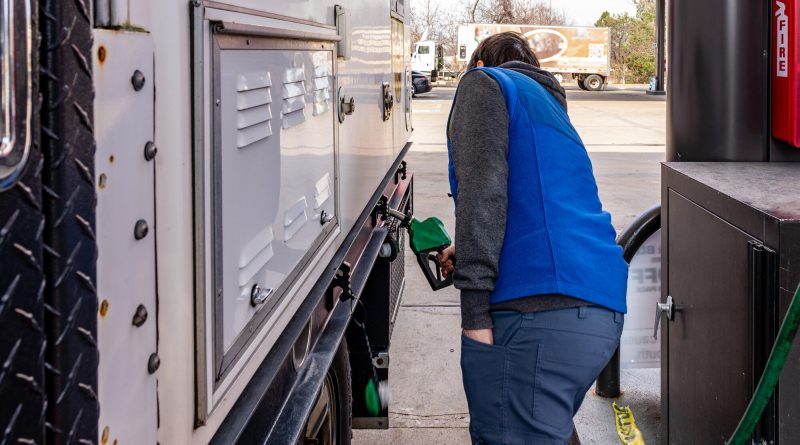
How $6 diesel could reshape US trucking rates
Subscribe to our free newsletter today to keep up to date with the latest transportation and logistics news.
US diesel prices have crossed $6 per gallon for the first time, adding a fresh cost shock for trucking companies and the supply chains that depend on them.
The national average reached about $6.06 per gallon on Sept. 11, up roughly 63% from a year earlier. California diesel was close to $8 per gallon. The increase followed supply disruptions linked to conflicts involving Iran and Ukraine, including pressure on Middle Eastern oil flows and Russian refining capacity.
For trucking operators, the timing is difficult. Average truck operating costs reached a record $2.336 per mile in 2025, according to the American Transportation Research Institute. Even without fuel, costs rose 4.2% to $1.854 per mile. Maintenance, tires, tolls and employee benefits also became more expensive.
Diesel above $6 therefore lands on an industry that already has little room to absorb another major cost increase.
The first effect will be higher fuel surcharges. If elevated prices last, the impact could spread further. Shippers may face higher contract rates, smaller carriers could see margins tighten and some freight may shift toward rail. Fleet investment decisions could also change.
Higher diesel costs will move through trucking rates unevenly
Fuel surcharges are designed to protect carriers from sudden changes in diesel prices. In many large shipper contracts, the charge rises or falls against a published fuel index.
That provides some protection, but it does not remove the risk.
There is usually a delay between a carrier buying diesel and recovering the added cost from a customer. Some contracts also compensate carriers more effectively than others. Empty miles, idling, congestion and differences in truck fuel economy can leave operators paying costs that a surcharge does not fully cover.
This makes smaller fleets and owner-operators particularly exposed. They buy fuel at current market prices but may have less negotiating power with shippers and brokers.
Larger contract carriers are generally better placed if they have clear fuel formulas and enough scale to negotiate favorable terms. Spot-market operators may also be able to raise prices quickly when trucks are scarce, although they face greater week-to-week rate swings.
The freight market was already showing signs of stronger carrier pricing before diesel crossed $6.
The Cass Truckload Linehaul Index increased 11.3% year over year in August. The index measures linehaul pricing without fuel and accessorial charges. Freight expenditures rose 18.7% from a year earlier.
DAT Freight & Analytics also reported tighter capacity. In June, the average dry van spot rate moved above the contract rate for the first time since February 2022. Spot linehaul rates for van, refrigerated and flatbed freight were at least 39% higher than a year earlier, even though freight volumes were flat or lower.
That gives carriers facing higher diesel bills more leverage in rate talks than they had during the freight downturn.
Refrigerated, agricultural and long-haul freight face greater exposure
The cost increase will not be spread evenly across logistics.
Long-haul truckload operators face a direct problem because fuel use rises with distance. Heavy freight adds further pressure because higher vehicle weight reduces fuel economy.
Refrigerated trucking is also exposed. A refrigerated trailer needs fuel to maintain temperature as well as move the load. Higher diesel costs can therefore raise the transport cost of meat, dairy products, produce, frozen food and other temperature-sensitive goods.
Agriculture faces a wider challenge. Diesel powers tractors and harvesting equipment as well as the trucks used to move crops, livestock, feed and other products. The price increase also comes during the US fall harvest, when agricultural diesel demand is high.
Port drayage operators may face similar pressure. Their trucks often spend time idling or moving slowly in congested areas, which can increase fuel use relative to productive mileage.
Construction materials, machinery and other heavy industrial freight are also vulnerable. Parcel and last-mile networks have different operating patterns, but their high daily mileage means fuel costs can add up quickly across large fleets.
The effect will eventually reach shippers. Transportation costs are built into the price of raw materials, components and finished goods. A manufacturer can pay more to receive materials and then pay again when finished products move to a warehouse or customer.
A short diesel spike may appear mainly as a temporary surcharge. A sustained increase creates a greater chance that higher logistics costs will enter supplier prices and annual freight budgets.
High diesel prices could change contracts, modes and fleets
If diesel stays close to current levels, transportation contracts are likely to receive more attention.
Carriers may seek faster fuel-surcharge resets, stronger minimum provisions or formulas that reflect regional fuel differences. They may also push for better treatment of empty miles and fuel used outside loaded transportation.
Shippers, in turn, could look more closely at transportation modes.
Rail has a large fuel-efficiency advantage over trucking on suitable long-distance routes. The Association of American Railroads says freight rail can move one ton of cargo nearly 500 miles on one gallon of fuel and is about three to four times more fuel-efficient than trucks on average.
US railroads handled 14.06 million intermodal containers and trailers in 2025, the second-highest annual volume on record.
Higher diesel prices strengthen the case for moving some long-haul consumer goods, imports and industrial freight by intermodal rail. But the shift has limits. Trucks remain better suited to shorter routes, urgent deliveries and freight that requires direct door-to-door service.
Fleet investment could also move in two directions.
Large carriers may place more value on newer fuel-efficient tractors, aerodynamic equipment, idle-reduction technology and route-planning systems. Alternative powertrains may also receive more attention on routes where they already make financial sense.
Smaller fleets face a harder choice. Higher diesel bills take cash away from equipment replacement. ATRI found that small fleets reduced spending on trucks and trailers in 2025, while truckload fleets with more than 1,000 trucks increased procurement spending by 16.1%.
That could widen the cost gap between large fleets that can invest in more efficient equipment and smaller carriers that continue running older trucks.
The duration of the fuel shock will decide how much changes. A brief period above $6 would mainly increase surcharges and operating costs. Months of elevated diesel prices would give carriers and shippers more reason to rewrite contracts, move suitable freight to rail and invest in equipment that uses less fuel.
For US supply chains, that distinction matters. Diesel at $6 is already a trucking cost problem. If it persists, it could become a wider transportation strategy problem.
Source