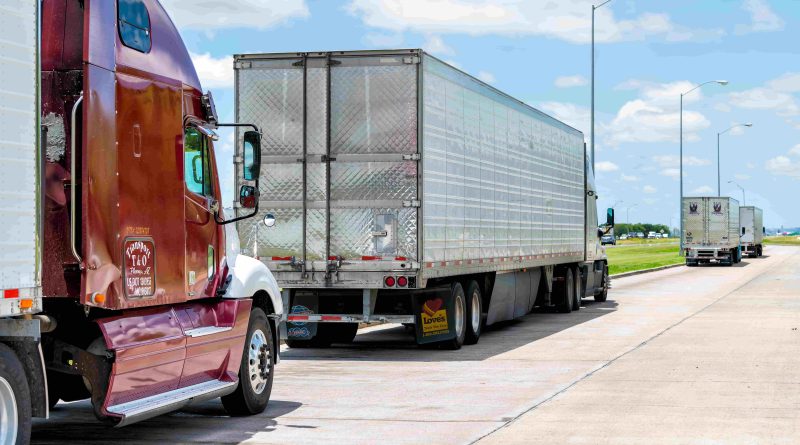
Knight-Swift says hiring drivers is as hard as it has been in years
Subscribe to our free newsletter today to keep up to date with the latest transportation and logistics news.
Knight-Swift Transportation says hiring truck drivers is as hard as it has been in years, and it expects that pressure, together with rising costs, to push truckload rates higher again in 2027.
The Phoenix-based carrier, which runs the largest full truckload fleet in North America, reported third-quarter revenue of $2.2 billion on Oct. 21, up 14.2% from a year earlier. Adjusted earnings per share rose to $0.83 from $0.32, while truckload revenue per loaded mile, excluding fuel surcharge, climbed 9.7%.
Those results add weight to a view that has been building across trucking through 2026. Capacity is tightening, and carriers are regaining pricing power after a long stretch of weak rates.
Knight-Swift’s own commentary points to where that pressure is coming from. CEO Adam Miller said industry capacity remains under pressure and that “sourcing quality drivers is as challenging as it has been in years.”
The driver shortage is now shaping Knight-Swift’s truckload fleet
The squeeze showed up directly in the company’s operations. Knight-Swift said a tightening driver market cut into its seated truck count, the number of tractors with a driver assigned, during the second quarter. Spending on recruiting, training, and driver pay stabilized that count in July, and it held through the third quarter.
Even so, the fleet is still smaller than it was. Average tractors in the truckload segment fell 4.0% year over year to 20,470, and loaded miles were down 3.0%.
Revenue grew anyway. Truckload revenue, excluding fuel surcharge and intersegment transactions, rose 6.5%, which the company called its strongest organic growth in more than 4 years. Pricing did the work. In Knight-Swift’s over-the-road service, revenue per loaded mile rose by a mid-teens percentage.
Efficiency gains helped too. The share of empty miles fell to 12.1% from 13.8%, and the truckload segment’s adjusted operating ratio improved 700 basis points to 89.2%. Operating ratio measures operating costs as a share of revenue, so a lower figure means wider margins.
To keep trucks seated, Knight-Swift is leaning on its training academy network, which Miller described as one of the largest in the country. The company said it is preparing further measures to develop drivers and improve utilization. The release does not attribute the driver squeeze to any single cause.
Truckload contract rates are rising, and 2027 could bring more
For shippers, the pricing detail matters more than the headline profit.
Miller said Knight-Swift’s spot pricing ran well above contract rates in the quarter, while contract rates kept accelerating throughout the period. Its tender rejection rates, the share of contracted loads a carrier turns down, ran 2 to 3 times higher than broader market measures. High rejection rates usually signal that carriers have better-paying options than the freight they agreed to haul.
Knight-Swift expects that to carry into next year. Management said ongoing cost inflation and limited capacity will require further significant rate increases in 2027, both to rebuild margins and to fund investment in its fleet. Fuel and driver-related costs both rose from the second quarter.
Its other businesses point the same way. In logistics, revenue per brokerage load jumped 46.7% while load count fell 32.6%, as the company held out for profitable freight. Intermodal revenue grew 30.6%, with loads at their highest level in more than 5 years, which Knight-Swift linked partly to tight trucking capacity and high fuel prices. In less-than-truckload, the company said tightening in truckload is making pricing more supportive.
The freight recovery rests on tighter capacity rather than stronger demand
The headline figures need some context. Part of the jump in earnings came from outside trucking operations. Interest expense fell by $22.8 million year over year, the effective tax rate was lower, and the prior-year quarter carried $34.8 million of impairment charges.
Demand looks steady rather than spectacular. Miller described the truckload market as largely in line with normal seasonality and said contractual volumes remained stable. That suggests the rate gains are coming mainly from tighter supply, not a jump in freight volumes.
Knight-Swift is preparing for a solid peak season and said it has more peak project arrangements in place than at any time since the pandemic, though it cannot control how much volume they produce. It guided fourth-quarter adjusted earnings per share of $0.78 to $0.84.
The open question is how far the driver squeeze goes. If carriers struggle to seat trucks through the 2027 bid season, shippers could face higher contract rates regardless of demand. If more drivers come back into the market, or freight volumes soften, the pricing power large carriers have rebuilt this year may prove harder to hold.
Source:
Knight-Swift Q3 2026 earnings release (SEC filing)