Lowe’s teams up with Wing and DoorDash for 20-minute drone delivery
Subscribe to our free newsletter today to keep up to date with the latest transportation and logistics news.
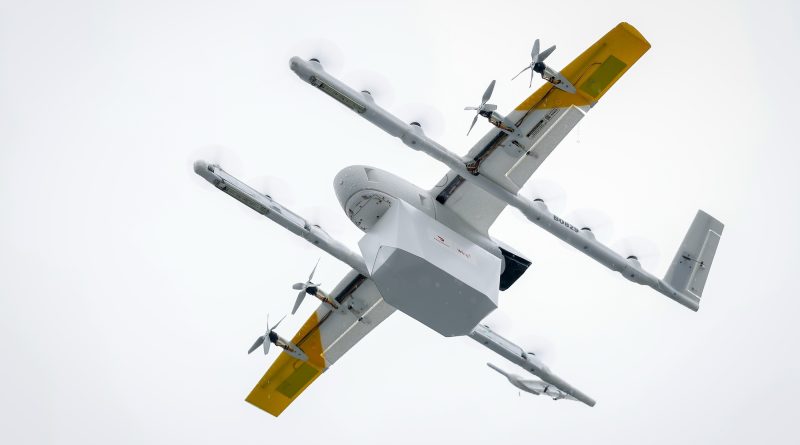
Lowe’s is testing drone delivery for home improvement products in North Carolina, putting the technology to work on a long-standing retail problem: how to deliver small, urgent orders quickly without sending a vehicle.
The home improvement retailer launched the service Sept. 24 from its store in Matthews, North Carolina. Customers in eligible areas can order selected Lowe’s products through a dedicated storefront on DoorDash. Drone operator Wing then handles the flight.
Orders can arrive in as little as 20 minutes, according to Lowe’s.
The service is limited by the aircraft’s carrying capacity. Wing drones can transport orders weighing about 2.5 pounds per flight. That rules out much of Lowe’s inventory, but still allows products such as hand tools, tape, batteries, paint supplies, soap and cleaning products.
That limit also helps define where drones could fit into retail logistics.
Customers may be unlikely to need a large home improvement order within 20 minutes. A missing tool, battery or roll of tape can be different. One small product can interrupt a repair or other job and force another trip to the store.
Drone delivery could give retailers another way to serve those orders without using the same delivery model for every purchase.
Lowe’s drone delivery targets small and urgent purchases
The last mile has traditionally required a trade-off between speed, cost and shipment size.
Delivery vans can carry many orders on one route, making them well suited to higher volumes and larger products. Parcel networks can move goods over long distances at scale. Store pickup gives customers another option when they need an item quickly.
Drones have a much smaller carrying capacity.
That makes replacing conventional delivery fleets an unlikely near-term role. Their value may instead lie in handling a narrow category of lightweight orders where time is particularly important.
Home improvement provides an interesting test of that idea.
A small item can have a large effect on whether work continues. A customer who discovers that a battery is flat, a fitting is missing or a roll of tape has run out may otherwise need to stop work and travel to a store.
If a drone can complete that trip instead, delivery speed becomes part of the product’s usefulness rather than simply an added convenience.
The Lowe’s pilot therefore tests more than customer interest in a new delivery method. It could provide information about which products people order, when they use the service and whether rapid delivery changes how customers shop for small project supplies.
Those details will help determine whether the model makes economic sense beyond a limited trial.
Retailers are starting to plug into shared drone networks
Another important part of the Lowe’s test is its use of outside delivery infrastructure. Lowe’s has not developed its own drone aircraft or built an independent aviation network for the pilot. Wing operates the drones, while DoorDash provides the digital ordering channel.
That approach could lower one of the barriers to wider retail adoption. Operating commercial aircraft brings requirements that sit far outside the main business of most retailers. Using specialist partners allows a retailer to test drone fulfillment while relying on existing technology and operating experience.
Wing says it has completed more than 1 million commercial home deliveries. Its work with Walmart is also expanding. The companies have said their network is expected to operate from more than 270 Walmart locations during 2027 and reach more than 40 million Americans.
Scale matters because drone delivery becomes more useful to retailers when the supporting network already exists.
A store that can connect its inventory to an established drone service faces a different investment decision from one that must develop the entire system itself.
Over time, drones could become another delivery option within a broader retail network. An order could move by parcel carrier, van, customer pickup or drone depending on its size, destination and urgency.
For logistics operators, this points toward a more varied last mile rather than the replacement of one delivery method with another.
Drone delivery may find its role at the fastest end of logistics
There are still clear limits to the model.
Weight restrictions mean most large home improvement products cannot travel by drone. Geography matters as well. Customers must be within a service area and have a suitable location where the aircraft can lower the order.
Aviation safety will remain an important consideration as the number of commercial flights increases. Noise and privacy concerns may also influence public acceptance, particularly if drone services expand across densely populated areas.
These constraints mean the technology’s commercial case is likely to depend on selecting the right orders.
The Lowe’s pilot offers one example of how that could work. Rather than asking drones to handle the same deliveries as vans, the retailer is testing them on products that are light enough to fly and useful enough to justify rapid delivery.
That distinction could become more important as retailers add more fulfillment choices.
Lowe’s reported more than $86 billion in fiscal 2025 sales and operates more than 1,750 home improvement stores, alongside hundreds of branches and distribution facilities. A pilot at one North Carolina store is therefore a small test within a much larger network.
Its narrow scope also provides a clear test of where the technology may fit.
Drone delivery does not have to carry lumber, appliances or bulk orders to play a useful role in home improvement logistics. It needs enough customers to value getting a small item to the right place quickly.
If retailers can identify those orders and route them through shared drone networks, drones could gain a defined role alongside established last-mile services.
Source:
Yahoo Finance
Photo Credit:
Lowe’s