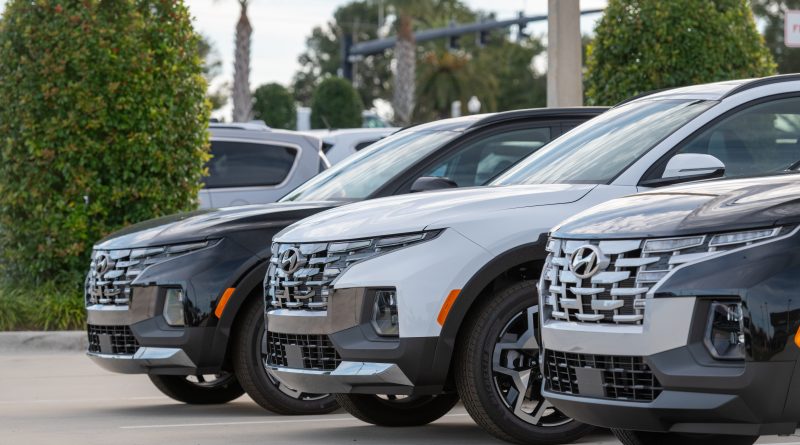
Nearly 300,000 Hyundai vehicles recalled over seatbelt risk
Subscribe to our free newsletter today to keep up to date with the latest transportation and logistics news.
Hyundai’s decision to recall nearly 300,000 vehicles over a seatbelt defect places renewed focus on one of the most tightly regulated components in automotive safety. The issue centers on seatbelt pretensioners, which are designed to tighten restraints during a crash. In this case, the mechanism may malfunction and potentially send metal fragments into the cabin. Reports of injuries linked to the defect increase urgency and shift the recall beyond a routine quality issue into a broader discussion about system reliability, supplier accountability and the cost of failure in modern vehicle design.
The scale draws attention. Recalls affecting hundreds of thousands of vehicles are not uncommon, yet those tied directly to occupant safety carry greater weight. For manufacturers, these events test engineering resilience and crisis response capabilities across operations.
Why a seatbelt defect carries outsized regulatory and safety risk
Seatbelt pretensioners form part of an integrated safety system that includes airbags, sensors and control units. Their function is simple in theory but complex in execution. During a collision, the pretensioner retracts the belt within milliseconds, reducing slack and positioning occupants for protection. Any failure within this sequence can compromise the restraint system.
In Hyundai’s case, the risk stems from a potential explosion within the pretensioner assembly. While rare, such failures introduce hazards inside the vehicle cabin. Metal fragments can cause injuries independent of the crash itself, a scenario regulators treat with heightened concern.
Safety agencies such as the National Highway Traffic Safety Administration maintain strict oversight of restraint systems because of their direct link to survival outcomes in accidents. Defects in these components often trigger faster recalls, deeper investigations and closer scrutiny of testing protocols. For manufacturers, this creates a compressed timeline to identify root causes, coordinate fixes and communicate with regulators and customers.
Past incidents across the industry show how defects in safety-critical components can escalate. Airbag recalls over the past decade affected tens of millions of vehicles globally and led to prolonged legal and financial consequences. While Hyundai’s current recall is smaller in comparison, the underlying dynamics are similar. When a system designed to protect occupants introduces risk, tolerance for delay or ambiguity narrows.
The operational and financial strain behind large-scale recalls
Beyond the technical failure, recalls of this magnitude create immediate operational challenges. Automakers must identify affected vehicles, notify owners and coordinate repairs across dealership networks. Each step requires precision and speed, particularly when safety is involved.
The logistics are complex. Replacement parts must be manufactured, distributed and installed across multiple regions. Supply chain constraints can slow this process, extending timelines and increasing costs. When components are sourced from third-party suppliers, manufacturers must assess whether the defect originated in design, production or quality control processes.
Financial exposure can escalate quickly. Direct costs include parts, labor and distribution, while indirect costs may involve legal claims, regulatory penalties and lost sales. Industry estimates suggest that large recalls can reach hundreds of millions of dollars, depending on scope and severity. For Hyundai, the recall adds to a series of past quality-related issues, which may affect perception among consumers and investors.
There is also a reputational dimension. Automotive brands operate in a competitive market where safety is a core expectation. Recalls tied to critical systems can erode confidence over time. Even when companies act quickly and transparently, the perception of recurring issues may persist.
How recalls influence brand trust and customer decision-making
Consumer response to recalls varies, but safety-related issues often have a lasting impact. Customers may question reliability when defects involve components designed to protect them in high-risk situations. Trust, once affected, can take time to rebuild.
Hyundai has made gains in brand perception over the past decade, positioning itself as a value-driven manufacturer with improving quality standards. Events like this test that progress. The company’s handling of the recall, including communication clarity and repair efficiency, will shape how customers interpret the incident.
Transparency plays a central role. Clear guidance on affected models, risk mitigation and repair timelines helps maintain credibility. Delays or confusion can increase frustration and lead to negative sentiment across media and digital channels.
For fleet operators and business buyers, recalls introduce additional considerations. Downtime, scheduling disruptions and administrative overhead can influence purchasing decisions. In a B2B context, reliability extends beyond product performance to include the manufacturer’s ability to manage issues without disrupting operations.
What the recall signals about the future of automotive safety systems
The Hyundai recall reflects a broader shift toward increasingly complex safety systems. Modern vehicles rely on interconnected components that depend on precise engineering and integration. As this complexity increases, so does the potential for failure points.
Manufacturers face pressure to strengthen validation processes, particularly for components with direct safety implications. This includes more rigorous testing, improved supplier oversight and enhanced traceability across production. Digital tools and data analytics are becoming central to these efforts, enabling earlier detection of issues and faster response times.
Regulators are adapting as well. As vehicles incorporate advanced technologies, compliance frameworks continue to evolve, placing greater emphasis on proactive risk management. For automakers, this requires aligning engineering practices with stricter expectations while maintaining cost efficiency.
The recall reflects how safety remains both a technical and operational challenge. As vehicles become more advanced, the margin for error narrows and the consequences of failure become more visible.
Sources