
Offering accessible, reliable services, Nottingham Express Transit sits at the heart of Nottingham’s transport sector
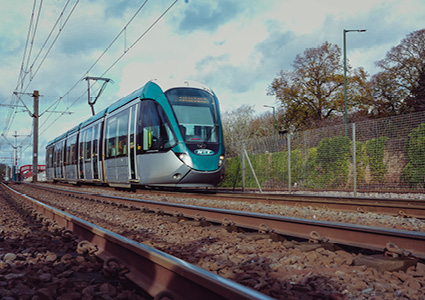
Committed to connecting communities across the city and beyond, Nottingham Express Transit (NET) has become a vital part of everyday life in Nottingham, UK. Since its establishment in 2004, NET’s network has grown into a modern, reliable tram system spanning 32 kilometers, with 51 stops, seven park-and-ride sites, and a fleet of 37 trams carrying more than 15 million passengers per year. Operating as a part of the Keolis Group, NET is underpinned by a unique partnership model and ensures green, convenient, and inclusive transport options for all.
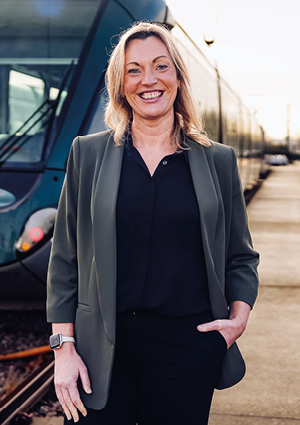
To learn more about NET’s operations and continued innovation, Transportation & Logistics International sits down with Sarah Turner, Managing Director, who shares insight into how the company is thriving now despite a tricky 2025. To begin, however, Sarah discusses the monumental impact that the network’s 2011 expansion had on the city and its communities.
“The expansion was always part of our long-term plan. The building work started in 2011, and the network was opened for passenger service in 2015. The expansion was part of the private finance initiative, so it was designed, built, and now operates under Tramlink,” she recounts.
“The network itself almost doubled in size. The expansion was transformational; it added a further 17.5 kilometers and 28 new stops to connect people to the city. One of the new stops feeds the Queen’s Medical Centre – Nottingham’s largest hospital – and actually made us the first tram network to serve a hospital, which has been a real lifesaver for people. It’s also improved access to education. We have a large student population in Nottingham, and the network helps them to move across the city, connecting them to their different campuses and accommodations.
“Alongside this, the expansion has reduced car journeys, thus reducing congestion and carbon emissions, but most importantly, it has connected more neighborhoods across the city,” Sarah affirms. “I believe that we’re the only tram network in the UK that is fully accessible; there are no barriers for people using our system. I speak to people who say that the tram system is a lifeline for them and without it, they wouldn’t have the independence that they do. It really is a fantastic service.”
Building upon its 20-plus-year legacy, NET remains committed to people, reliability, and continuous improvement. Over the past year, the company has focused on strengthening its service, listening closely to its customers, and responding effectively during challenges. This dedication translates into real, quantitative metrics that reflect both consistent performance and a culture that always prioritizes doing the right thing, even under pressure.
“Our customer satisfaction is really high,” Sarah affirms. “We have a 95 percent reliability rate and an overall satisfaction score of 85 percent, against the backdrop of the wider transport sector which sits at an average of 71.5 percent. Even after a year of turbulence, our customer satisfaction is improving, and I think a lot of that comes down to how we deal with disruption – how we focus and collaborate with our communities to deliver the best service we can. Even when things go wrong, we always put our customers first. I think that is worth celebrating.”
This unwavering focus on customer experience defines every aspect of NET’s operations and wider ethos. As passenger needs evolve, particularly in a post-pandemic world, the company has continued to evolve to ensure that it continues to provide the best possible service for its customers and communities.
“Since the pandemic, we’ve seen a huge shift in travel patterns, particularly with the introduction of more home-based work. We’re currently operating at around 85 percent of our pre-Covid passenger numbers, so it’s really important that we adapt our service to suit the change,” Sarah reveals. “As I’ve already mentioned, the student population in Nottingham is huge, so we have a thriving night-time economy and have seen more demand to run our services later into the evening. Because of this, we ran a trial last year where we slightly reduced our old, traditional peak services during the day to allow us to run more trams later into the evening. Not only did that trial help to serve the night-time economy, but it also helped with the local agenda for protecting women and girls. We also found that the trial gave us a lot more operational resilience; by running less trams during busy periods, we were able to recover quicker when things went wrong because the system was less congested, meaning we could provide a better service for our customers.”
As NET adapts its services to changing travel patterns, it continues to consider the wider passenger experience beyond timetables and capacity. Creating a safe and welcoming environment forms a key part of that commitment, particularly as more people rely on its services later into the evening, and so the company is looking into new innovations to help enhance customer experiences.
“We, like many industries, have sadly seen an increase in antisocial behavior, so it’s really important that we use whatever technology that we can to prevent it,” Sarah says. “At the moment, we’re working with an AI provider on a project that uses our CCTV systems to detect and highlight behavioral changes so we can spot antisocial behavior before it happens. We have an excellent relationship with Nottinghamshire Police and have an embedded officer who works within our control team who is helping us to develop this pilot.”
As NET looks to the future, its focus remains firmly on building a network that is not only efficient and reliable, but also responsive to the evolving needs of the communities it serves. From its continued investment in accessibility, customer experience, and innovative safety solutions, the company continues to demonstrate a clear commitment to long-term resilience and improvement and is well-positioned to remain at the heart of Nottingham’s transport sector for many more decades to come.
“For us, 2026 is all about stability,” Sarah reveals, looking to the rest of the year. “We had a tough year in 2025 where we saw an unprecedented amount of traffic collisions, most of which were out of our control; at one point, we had four trams down for repairs, which required us to put an emergency timetable in place to make sure that we could provide a reliable service for our customers.
“Our trams are now all repaired, so we want to focus on maintaining stability and perfecting the basics,” she says, concluding our conversation. “We’re focusing heavily on working with local authorities to improve the interface between trams, road vehicles, and the public to ensure that we can work together to reduce both collisions and antisocial behavior.”