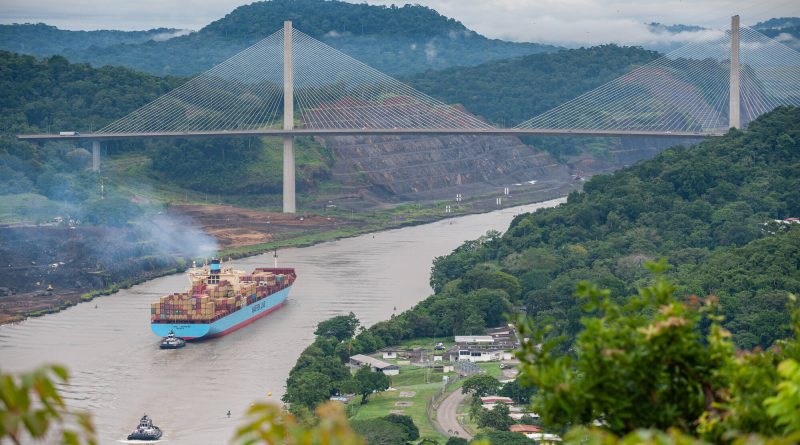
Panama Canal traffic cuts add new strain to US logistics
Subscribe to our free newsletter today to keep up to date with the latest transportation and logistics news.
The Panama Canal is preparing to cut daily ship traffic again as drought puts further pressure on one of the world’s main trade routes.
From October, an average of 29.5 vessels a day will be allowed through the canal. That is 18% below the 36 vessels a day recorded in August. Officials had already reduced daily traffic in September as lower rainfall affected water supplies.
The impact reaches far beyond Panama. The canal handles about 5% of global maritime trade and around 40% of US container traffic. It is a major route for goods moving between Asia and the US because it can shorten voyages and reduce transport costs.
For manufacturers, retailers and logistics operators, the latest restrictions add another source of uncertainty to global supply chains. A canal does not need to close to cause disruption. Longer waits, fewer transit slots and tighter booking rules can increase the cost of moving goods.
Water shortages are becoming a logistics constraint
The Panama Canal depends on freshwater to move ships between the Atlantic and Pacific oceans.
Its locks fill and empty to lift vessels from sea level to Lake Gatun and lower them again on the other side. The process uses large amounts of water. When lake levels fall, officials can restrict ship numbers and vessel draft to conserve supplies and maintain safe operations.
The Panama Canal Authority said in August that rainfall in the canal watershed was below expectations despite the start of the rainy season. It responded by adjusting booking slots at its Neopanamax and Panamax locks.
From Sept. 3, nine daily slots were available at the Neopanamax locks and 25 at the Panamax locks. Panamax availability was then scheduled to fall to 23 slots from Sept. 15.
The authority has also warned that vessels arriving without confirmed reservations may face longer waits.
El Niño is adding to the risk. The weather pattern is expected to strengthen later this year and has contributed to heat and low rainfall across parts of Central and South America.
That creates a direct link between weather conditions and freight capacity. For companies that depend on regular shipping schedules, water levels in Panama are becoming another factor in transport planning.
Longer waits can quickly raise costs
Shipping delays were already becoming more visible before the latest reduction.
In August, vessels were waiting about 10 days to enter the canal. The waterway uses a reservation system, but shipowners can also bid for some available capacity through auctions.
The value of certainty can rise sharply when capacity is tight. One container ship reportedly paid about $4 million in August for priority passage through the canal.
Most shippers will not pay that type of premium. The example still shows how limited capacity can change the economics of a major trade route.
Companies have several options when delays increase. They can wait, pay more for scarce capacity, change routes or adjust shipping schedules. Each choice carries a cost.
Longer voyages can increase fuel use and vessel operating costs. Delays can also cause problems further along the supply chain. Factories may receive materials later than planned, while retailers may need to hold more stock to protect against uncertain delivery times.
Businesses that have spent years reducing inventories may face a difficult choice. Lower inventories can reduce working capital, but they provide less protection when transport networks become less predictable.
The canal restrictions also come as shipping companies face disruption on other routes. That increases the value of having more than one option for important cargo flows.
The 2023 drought offers a warning for shippers
The Panama Canal has faced severe water shortages before.
In 2023, low lake levels led authorities to reduce daily transits from 38 vessels to 22. Ship queues grew and some companies began considering alternative routes.
The current situation has not yet reached those levels. The canal also has more experience managing water use and allocating limited capacity after the previous drought.
The earlier disruption shows how quickly a water shortage can affect supply chains.
This time, companies have more reason to respond early. Supply chain teams can review which shipments depend heavily on the canal, identify goods that cannot tolerate long delays and assess when alternative routes make financial sense.
Recurring water restrictions may now need to be treated as a regular planning risk rather than an unusual event.
Much will depend on rainfall in the coming months. Further transit reductions remain possible if El Niño strengthens and water levels continue to fall.
For shipping companies and cargo owners, flexibility is becoming more valuable. Longer planning windows, earlier bookings and alternative routes may cost more in the short term, but they can reduce exposure to sudden changes in canal capacity.
The Panama Canal remains one of the shortest and most efficient routes for a large share of global trade. Its value is not in doubt. What is changing is the level of certainty companies can attach to that route when water becomes scarce.
That makes Panama’s rainfall outlook increasingly relevant to decisions made in factories, warehouses and boardrooms thousands of miles away.
Source