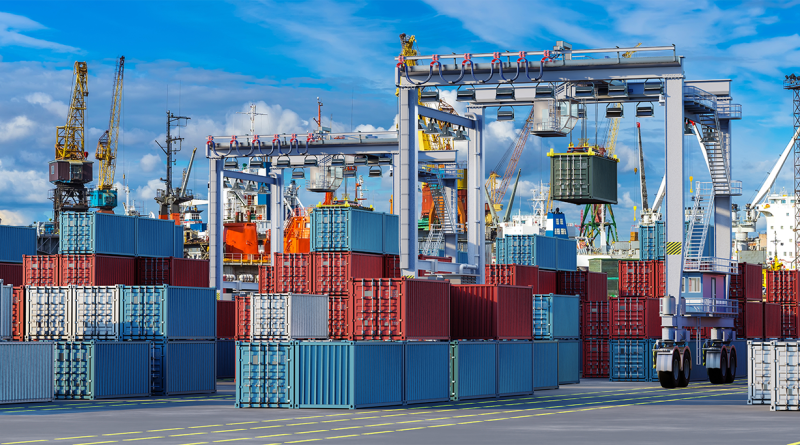
Philadelphia port secures $837 million for major expansion
Subscribe to our free newsletter today to keep up to date with the latest transportation and logistics news.
The Port of Philadelphia has announced an infrastructure expansion worth more than $837 million, backed by state, federal and private investment, in a development expected to more than double container-handling capacity and strengthen the port’s position in US maritime trade.
Announced on October 13, 2026, the investment represents the largest expansion in PhilaPort’s history, with plans to increase container capacity by 122% and automotive capacity by 18%. The project includes new marine infrastructure, additional terminal space, land acquisition and cargo-handling equipment designed to accommodate growing freight volumes.
Pennsylvania Governor Josh Shapiro announced $371.5 million in state funding, complemented by $266 million in federal support and at least $200 million in private investment. The expansion is projected to create more than 6,000 jobs and generate $45 million in state and local tax revenue, although these estimates depend on the development progressing as planned.
For shipping lines, terminal operators and logistics providers, the investment comes as Philadelphia records increasing container throughput and seeks to strengthen its established position in refrigerated cargo, automotive imports and regional distribution.
An $837 million investment will reshape Philadelphia’s port infrastructure
A substantial portion of the funding will support the development of the Southport Marine Terminal, including construction of a new 2,000-foot berth and acquisition of the 152-acre Mustin Yard property. The projects will provide additional space for container and automotive operations while addressing infrastructure constraints that could restrict future cargo growth.
The Southport development will introduce the port’s first new berth space in more than 50 years, creating additional capacity to accommodate vessel calls and increasing cargo volumes. The investment will support improvements in terminal operations, providing operators with greater flexibility in managing vessels, containers and inland freight movements.
Pennsylvania’s capital allocation includes $145 million for reclamation work at Southport Berth II and the North Wharf, $109.4 million for land acquisition, $58.1 million for cranes and equipment and $31 million for dredging at Southport Berth I. Additional improvements are planned for the Tioga Marine Terminal and properties within the Southern Port District, extending the investment beyond the new Southport facilities.
Private-sector involvement will play a significant role, with Holt Logistics and automotive transportation specialist GLOVIS America each committing $100 million. Their participation reflects commercial interest in expanding Philadelphia’s container and finished-vehicle operations, two cargo segments central to the port’s development strategy.
The infrastructure program will require coordination between government agencies, terminal operators, contractors and shipping interests. Construction is expected to begin in early 2027, subject to permitting and contractual arrangements, with individual projects progressing according to their respective development schedules.
Growing cargo volumes are driving demand for additional capacity
The expansion follows sustained growth in Philadelphia’s container operations, with throughput reaching a record 889,268 twenty-foot equivalent units (TEUs) in 2025, an increase of 6% from the previous year. According to PhilaPort, container volumes have risen 39% since 2020, reflecting demand for its services despite fluctuations in international trade.
Refrigerated cargo remains particularly important to Philadelphia’s commercial position. Temperature-controlled shipments accounted for 64% of containerized imports in 2025, reflecting the port’s established role in transporting fresh produce and other perishable commodities into US distribution networks.
Handling these shipments requires specialized infrastructure, including electrical connections for refrigerated containers, temperature monitoring systems and coordinated transportation between marine terminals, warehouses and inland destinations. Expanding container capacity could provide additional operational flexibility for cargo owners that depend on reliable scheduling and the preservation of temperature-sensitive products.
Philadelphia’s recent performance provides further context for the investment. The port ranked first among US container ports and 48th globally in the World Bank and S&P Global Market Intelligence’s 2025 Container Port Performance Index, marking its third consecutive year as the highest-ranked US port.
The index evaluates vessel turnaround performance rather than total throughput, offering a measure of how efficiently ports handle ships during terminal calls. Maintaining that performance as volumes increase will require appropriate investment in equipment, labor, storage capacity and connections to inland transportation networks.
Automotive logistics represents another opportunity for expansion. The proposed 18% increase in vehicle-handling capacity would accommodate more than 100,000 additional vehicles, creating opportunities for manufacturers, importers and finished-vehicle logistics providers seeking access to East Coast distribution markets.
For shipping lines and cargo owners, the commercial value of the development will depend on how effectively the additional infrastructure supports vessel scheduling, terminal productivity and the movement of cargo beyond the waterfront.
The expansion could strengthen Philadelphia’s position in East Coast trade
Philadelphia’s investment comes as US ports continue developing infrastructure to accommodate changing shipping requirements, larger cargo volumes and increasing demands on regional supply chains. Although Philadelphia operates at a smaller scale than major East Coast gateways such as New York and New Jersey, its specialization in refrigerated and automotive cargo provides an established commercial base for further development.
Expanding capacity could strengthen the port’s ability to attract additional shipping services, although infrastructure improvements alone will not determine its competitiveness. Ocean carriers and cargo owners evaluate terminal charges, vessel turnaround times, inland transportation costs and access to distribution facilities when selecting ports.
The economic implications could extend across Pennsylvania. PhilaPort reported that container operations supported more than 8,000 direct, indirect and induced jobs in 2025, generating more than $905 million in labor income and nearly $1.2 billion in economic output.
Officials estimate that the expansion could create more than 6,000 additional jobs, although employment gains will depend on construction activity, terminal operations and the volume of new cargo attracted to Philadelphia. The projected $45 million in state and local tax revenue is similarly contingent on the anticipated increase in economic activity.
The investment supports PhilaPort’s Destination 2040 Strategic Plan, which identifies additional infrastructure and cargo-handling capacity as priorities for long-term growth. Developing these facilities will require considerable construction activity and coordination with inland transportation providers to accommodate the expected increase in freight movements.
For logistics operators, the expansion presents the prospect of additional terminal capacity and greater flexibility in routing international cargo through the Mid-Atlantic region. Its longer-term significance will depend on whether new infrastructure can attract sufficient commercial demand while maintaining the operational efficiency that has characterized Philadelphia’s recent performance.
With construction scheduled to begin in early 2027, the Southport berth development, Mustin Yard acquisition and equipment investments will provide the first measurable indications of how the $837 million program translates into additional capacity for one of the East Coast’s established maritime gateways.
Source:
City & State Pennsylvania