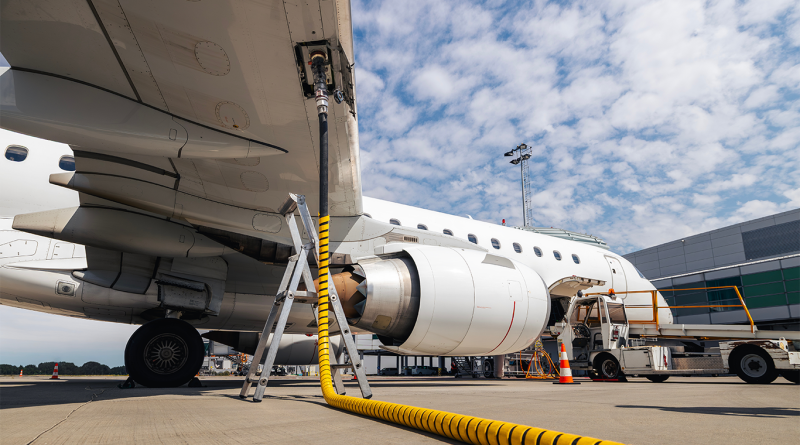
The $5 billion fuel shock hitting US airlines
Subscribe to our free newsletter today to keep up to date with the latest transportation and logistics news.
Major US passenger airlines spent $5.06 billion on jet fuel in March 2026, a 56.4% increase from the previous month. Airlines consumed 1.615 billion gallons during the month, up 19.5% from February, while the average price paid rose to $3.13 per gallon, an increase of 30.9%. The combination produced one of the sharpest monthly increases in airline fuel spending in recent years.
The figures arrived as global energy markets reacted to disruption in the Middle East. Constraints on shipping through the Strait of Hormuz, one of the world’s most important energy corridors, tightened jet fuel supplies and pushed prices higher across international markets. The effects extended well beyond crude oil, creating immediate financial pressure for airlines.
Fuel remains one of the largest airline operating expenses. Sharp price increases leave carriers with few immediate options beyond adjusting pricing, capacity and operating plans.
Rising fuel prices outweighed stronger flight activity
The March figures show how airline costs can accelerate when higher demand coincides with rising fuel prices. Flight schedules expanded from February, increasing fuel consumption by nearly one-fifth. The larger contributor to higher spending, however, was the increase in the price of jet fuel.
Jet fuel does not always follow crude oil prices. Refining capacity, distribution networks and regional inventories all influence aviation fuel pricing. During periods of geopolitical disruption, refining margins can widen rapidly, forcing airlines to pay significantly more even when crude oil prices rise by a smaller amount.
US refiners increased production and exports to meet higher international demand, yet domestic airlines still faced substantially higher procurement costs. Fuel became both an operational concern and a boardroom issue.
The increase was also significant on an annual basis. Airlines spent $3.88 billion on jet fuel during March 2025 compared with $5.06 billion in March 2026, illustrating how operating conditions changed within twelve months.
Airlines have limited tools to offset higher fuel costs
Fuel represents a cost that airlines cannot quickly eliminate. Most carriers respond through a combination of commercial, operational and financial measures.
Ticket prices often rise first. Airlines may also increase baggage fees and adjust route networks to protect profitability. Services with lower passenger demand become more difficult to justify when operating costs increase sharply.
Fleet composition also plays an important role. Airlines operating newer aircraft benefit from lower fuel consumption, reducing exposure to sustained price increases. Older aircraft become progressively more expensive to operate as fuel prices climb.
Fuel hedging provides another layer of protection. Airlines that secured fuel contracts before prices increased can soften the financial impact. Those with limited hedging remain more exposed to market volatility.
Low-cost carriers face particular pressure because their business models depend on maintaining the lowest possible operating costs. Thin margins leave less room to absorb sudden increases in fuel expenditure.
Spirit Airlines, which recently ceased operations, reported an additional $100 million in fuel costs during March and April and identified the price surge as a major factor in the failure of its restructuring efforts. Several low-cost airlines have sought temporary government assistance, although US transportation officials have not announced direct financial support.
Southwest Airlines CEO Bob Jordan recently observed that airlines periodically face fuel price shocks and that long-term resilience depends on building businesses capable of managing those cycles. His comments reflect one of aviation’s enduring challenges. Fuel prices remain largely outside an airline’s control.
The effects will reach passengers and reshape competition
Fuel inflation rarely remains confined to airline balance sheets. Over time it influences fares, network planning and competitive dynamics.
Passengers are likely to see higher ticket prices, increased ancillary charges and fewer services on lower-demand routes. Business travel pricing may remain firm as airlines become less willing to discount seats while operating costs stay elevated. Leisure travelers could experience reduced service to secondary airports as airlines concentrate capacity on routes delivering stronger financial returns.
The current environment also strengthens the position of airlines with healthier balance sheets, diversified route networks and younger fleets. These carriers generally possess greater flexibility when fuel prices remain elevated over extended periods.
March’s fuel bill represents more than a single month of unusually high costs. It highlights how quickly geopolitical events can reshape airline economics and force strategic decisions across pricing, fleet planning and network management. While airlines have navigated fuel shocks before, the pace of this increase demonstrates that operational resilience is becoming one of the industry’s most valuable competitive advantages.
Sources
CNBC