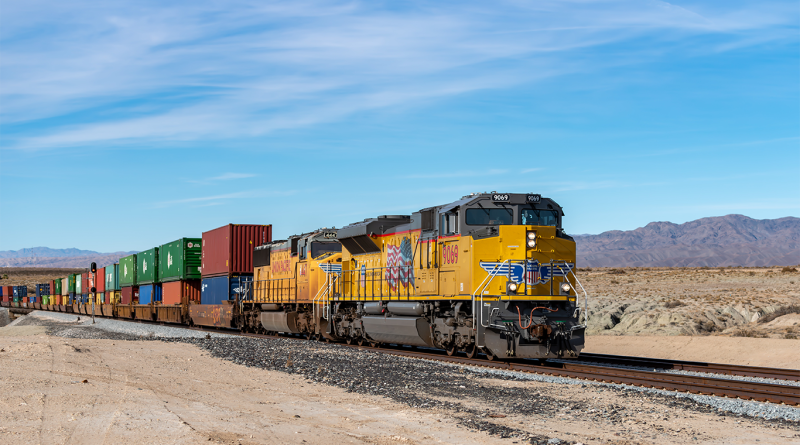
The next phase begins for Union Pacific’s Norfolk Southern bid
Subscribe to our free newsletter today to keep up to date with the latest transportation and logistics news.
Union Pacific and Norfolk Southern have taken another step in what is expected to be one of the most closely scrutinized transportation mergers in decades. Responding to requests from the Surface Transportation Board (STB), the companies have submitted additional information and expanded customer commitments as they seek approval for a transaction that would create the first single-line freight railroad connecting the US East and West coasts.
The supplemental filing marks more than a procedural milestone. It shows how the companies are addressing concerns raised by regulators, customers and competing railroads before the STB determines whether the merger serves the public interest. Regulatory approval remains far from certain, but the latest commitments indicate Union Pacific is willing to make additional concessions to strengthen its application.
Union Pacific broadens customer commitments as the review continues
The STB requested supplemental information after reviewing the companies’ original application, seeking greater detail on competition, network operations, service reliability and ownership interests in shared rail infrastructure. Rather than simply responding to technical questions, Union Pacific and Norfolk Southern used the opportunity to introduce voluntary commitments intended to reassure customers throughout the integration process.
Among the most significant proposals are expanded access to fixed-rate contracts, additional reciprocal switching opportunities in selected markets and temporary service protections designed to reduce disruption while the two networks are integrated. The companies have also proposed mechanisms allowing customers to seek rate relief if anticipated service improvements fail to materialize within agreed timeframes.
These commitments reflect lessons from previous rail mergers, where service disruptions attracted criticism from regulators and shippers. By placing customer protections at the center of the application, Union Pacific is attempting to demonstrate that operational benefits can be achieved without compromising network reliability.
The filing also addresses questions surrounding ownership interests in jointly controlled rail entities, including the Terminal Railroad Association of St. Louis, Kansas City Terminal Railway and TTX Company. Union Pacific confirmed it does not intend to seek control of these organizations, an assurance intended to ease concerns that the merger could extend competitive influence beyond the combined railroad.
Competition remains the defining issue for regulators
Competition remains the central issue facing the merger. Unlike previous consolidation completed decades ago, today’s regulatory framework places greater emphasis on preserving competitive access for rail customers. The STB’s merger rules require applicants to demonstrate not only operational efficiencies but also clear public benefits that outweigh any reduction in competition.
Many of the concerns raised during the early stages of the review focus on market access, interchange opportunities and the potential impact on captive shippers that rely on a single railroad. Regulators are expected to examine whether the combined network could limit competitive options in certain freight corridors or increase pricing power over time.
One notable development has been the agreement between Union Pacific and Canadian National. Canadian National agreed to withdraw its opposition after securing expanded access across parts of the Midwest and resolving issues involving shared rail assets. Removing one of the merger’s largest industry opponents is significant, although other stakeholders, including customers and public interest groups, are expected to continue participating in the review.
The STB has repeatedly emphasized that every aspect of the transaction will receive detailed examination before any timetable for approval is established. The supplemental filing therefore represents another stage in what is likely to be an extended regulatory process rather than an indication that approval is close.
The outcome could reshape freight transportation across North America
If approved, the merger would reshape North American freight rail by creating a single railroad stretching from the Atlantic Coast to the Pacific Coast. For manufacturers, retailers, agricultural producers and logistics providers, that could simplify long-distance shipments by reducing the need for freight to transfer between railroads.
Supporters argue that a unified network would improve transit times, increase equipment utilization and create new routing options that strengthen supply chains. Direct service across thousands of miles could reduce interchange delays while improving consistency for time-sensitive freight.
The companies also argue that stronger rail services could attract additional freight from highways, reducing congestion and lowering transportation-related emissions. Those claims align with wider industry efforts to increase the use of rail for long-haul freight.
Critics continue to question whether those benefits can be achieved without reducing competition in key markets. They argue that any efficiency gains must be balanced against long-term protections for customers with limited transportation alternatives.
The STB now faces the task of weighing these competing arguments as it reviews one of the most significant rail mergers in recent history. Its decision will influence more than the future of two railroads. It will also shape how regulators assess large-scale transportation consolidation in an industry that remains critical to the US economy.
For now, Union Pacific’s supplemental filing does not remove every obstacle. It does show the company recognizes that regulatory approval will depend as much on protecting customers and preserving competition as on delivering operational efficiencies. As the review progresses, those commitments are likely to become as important as the strategic rationale behind the merger itself.
Sources
Wall Street Journal