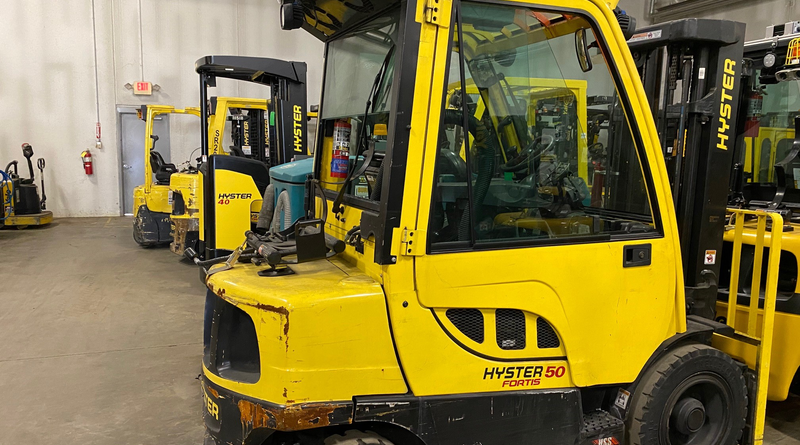
The Northeast Ohio Buyer’s Inspection Checklist: What Separates Reliable Used Forklifts from Costly Mistakes in 2026
Comprehensive, multipoint dealer inspections separate reliable used forklifts from costly mistakes by verifying mast integrity, hydraulic systems and battery health. Purchasing certified preowned units from an authorized dealer mitigates the total cost of ownership risks associated with unverified auction purchases.
Warehouse managers and logistics directors across Northeast Ohio face constant pressure to optimize fleet budgets without compromising supply chain efficiency. The secondary market offers attractive up-front pricing. However, procuring machinery without professional vetting introduces severe operational vulnerabilities. Understanding the hidden financial risks and the critical inspection points to secure reliable, certified equipment is essential to protecting long-term operations.
| 📍 WHERE TO BUY USED FORKLIFTS IN CLEVELAND AND NORTHEAST OHIO?Northeast Ohio buyers have three primary sourcing channels for used forklifts: BEST BET: Authorized dealers like Burns Industrial Equipment (serving Western Pennsylvania, Northeast Ohio, and West Virginia) offer certified preowned Yale and Hyster models with inspection documentation, warranties, and local service support.RISKY: Online marketplaces (Machinery Trader) offer lower up-front prices but typically sell equipment “as-is,” with no inspection records or warranty coverage.HIGH RISK: Equipment auctions offer the lowest initial cost but carry the highest total cost-of-ownership risk due to unknown maintenance histories and deferred repairs. For operations requiring next-day parts availability and same-day service response across the tristate region (PA/OH/WV), authorized local dealers eliminate the geographic service delays and warranty gaps associated with distant sellers or online-only transactions. |
A Look at the Used Forklift Market
The used forklift market has an extensive inventory. The rapid growth of e-commerce and technological innovations, like autonomous and battery-electric models, has prompted massive fleet upgrades across the transportation sector. This contributes to legacy inventory ending up in secondary channels.
When a regional logistics hub upgrades its lifts to autonomous models, it releases functional but aging units into the local Ohio market. Financial institutions are heavily backing this modernization shift, accelerating the pace at which companies purchase new assets and discard older machinery.
Industry analysts tracking this phenomenon note that the surplus of preowned inventory is a direct by-product of massive capital flowing into new material handling innovations.
“Despite ample financing and rental opportunities, the markets for forklifts and aerial equipment are flooded with used inventory,” Equipment Finance News reports. “Many lenders are targeting the material handling sector as new equipment innovations, including battery-electric forklifts and autonomous machines, support e-commerce growth. In fact, the global lift equipment market is projected to grow to $124 billion in 2032 from $85.2 billion in 2024.”
While high inventory creates a buyer’s market, finding quality machinery and matching exact lift capacity to specific applications requires rigorous vetting.
Evaluating a Forklift’s Total Cost of Ownership
Procurement teams must look past the initial acquisition price and calculate long-term operating expenses. They should factor in maintenance curves, downtime risks and the remaining lifespan of the battery system or engine type.
The up-front purchase price generally represents a fraction of the total lifetime spend, while maintenance and operating costs consume the vast majority of the budget. For example, an aging electric forklift might require a complete battery replacement. An older internal combustion model may suffer from failing hydraulic systems. Both scenarios dramatically impact long-term financial performance.
Calculating the accurate total cost of ownership requires an exact understanding of the machine’s usage history. Hour milestones can dictate when major, expensive components may fail.
According to a study about fuel cell and forklift applications, “The lifespan and energy consumption of the power source can vary depending on the model type of the forklift, the number of shifts per day, the operating hours per shift and the fuel or electricity capacity. Manufacturers suggest replacing the forklift every 10,000 to 20,000 hours of operation.”
Crossing high-hour thresholds carries severe financial implications. Consider a warehouse operation that saves $10,000 up front on an uninspected, 12,000-hour unit. However, it subsequently loses $15,000 in unplanned downtime and component replacements within the first year. This illustrates the false economy of auction purchases.
Compare this scenario to a competitor that invests slightly more in a dealer-certified, lower-hour unit with a predictable maintenance schedule. The difference in total operational cost is substantial.
How Dealership Reconditioning Reduces Buying Risks
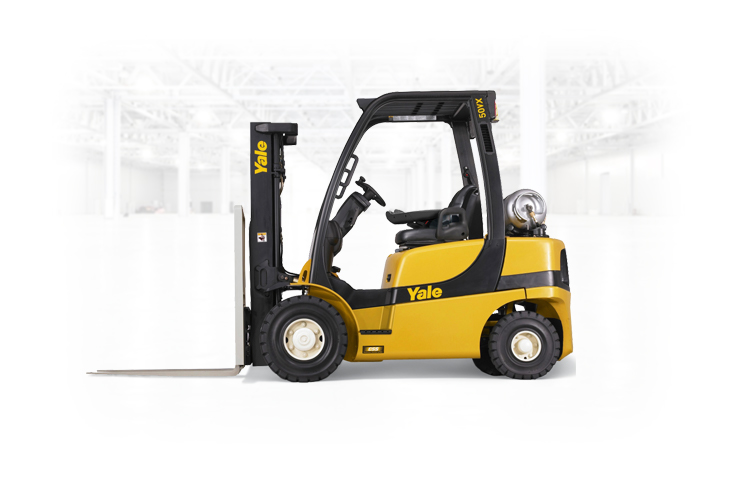
According to Burns Industrial Equipment, a used forklift dealer serving Northeast Ohio, “Reconditioned used equipment has the added benefits of being refurbished to ensure it functions as reliably as a new truck, at a fraction of the cost.”
Dealership reconditioning puts used forklifts through rigorous, multipoint inspections and component replacements. The process ensures the machinery meets stringent safety and performance standards while providing warranty coverage.
Partnering with an authorized local dealer over acquiring assets as-is from a third-party seller can help buyers avoid the financial fallout from structural damage or hydraulic failure. Uncertified units leave logistics companies vulnerable to these risks.
To mitigate these vulnerabilities, industry-leading dealers implement comprehensive refurbishment protocols that examine everything from load capacity to mast height. These protocols ensure the machine can handle the rigorous demands of a modern transportation hub.
Burns Industrial Equipment is a good example of how regional authorities approach this process. The authorized Yale and Hyster dealer standardized forklift inspections, which removed the guesswork for warehouse managers in Northeast Ohio. It offers three distinct tiers:
- Good: Equipment inspected for basic safety and operational readiness, ideal for budget-conscious facilities needing instant deployment.
- Better: Units passing a strict 200-point inspection, delivered fully cleaned with a dependable warranty.
- Best: Premium refurbishments involving the replacement of critical components and an exclusive 120-day warranty, designed for high-intensity, multishift operations.
Securing machinery with this level of documented reconditioning, backed by local service support, turns a used forklift from a potential liability into a reliable, long-term asset.
The Critical Prepurchase Inspection Points
Procurement teams must demand documented evaluations from their suppliers, as relying solely on a visual once-over does not suffice for modern logistics facilities. Buyers must scrutinize specific areas of vulnerability, such as:
- Checking the data plate for accurate load capacity.
- Examining the mast for hairline fractures.
- Verifying the hydraulic systems for subtle pressure leaks.
- Determining the battery’s age and condition.
- Testing the forklift’s load capacity.
- Assessing the machine’s maintenance documentation.
Authorized dealerships typically execute these thorough checks as standard procedure. Safety protocols dictate that meticulous exterior and internal audits occur long before any asset reaches the warehouse floor.
“Inspect the machine from wheels to lift before operation,” Burns Industrial Equipment recommends. “Are there any damaged or missing bolts, chains, forks or hose reels? Do you see any fluid leaks? What are the lift’s battery, oil and fuel levels?” This level of scrutiny prevents catastrophic midshift breakdowns. It can prevent minor maintenance needs from escalating into total engine or lift mechanism failures.
Consider a buyer who skipped inspecting the mast chains and hydraulic hoses on an auction purchase. Under the stress of heavy load testing, a compromised hose bursts, causing instant operational paralysis and requiring an expensive emergency service call. A standard dealership inspection would have prevented the incident.
Using Telemetry for Long-Term Maintenance
Using telemetry for long-term maintenance protects the initial investment by utilizing real-time data tracking. This technology anticipates repair needs, monitors operator behavior and prevents unexpected downtime.
Many modern warehouse environments rely on connected technology to optimize supply chain flow. Some industry-leading dealers offer forklifts integrated with advanced telemetry systems that act as a digital safety net, constantly monitoring machine health.
“With a connected fleet, your Hyster or Yale lift trucks automatically capture, transmit and analyze essential data — like operator activity, equipment usage, forklift collision detection and service needs — all in real time,” Burns Industrial Equipment shares. “This real-time data enables timely maintenance, better warehouse resource planning and lower incident rates. It lets you know exactly what’s happening with your fleet and operators, and compare KPIs to see what’s working and what needs to change.”
Instead of waiting for a component to fail and halt shipping docks, technicians can service parts exactly when the data indicates fatigue.
What Are the Hidden Financial Risks of Uninspected Forklifts?
The hidden financial risks of uninspected forklifts involve catastrophic component failures, unscheduled repair bills, debilitating operational delay and unchecked structural wear. These could create a hazardous environment for operators and surrounding personnel, as well as severe safety violations that can result in six-figure fines.
Regulatory bodies strictly penalize logistics organizations that fail to maintain safe operating conditions for material handling assets. In 2024, the U.S. Department of Labor cited a tire company for one willful and 11 serious violations after investigations following a forklift incident.
“OSHA inspectors learned the forklift operator was struck by a falling pallet of industrial truck tires after the pallet’s three-tier rack storage system failed. The system’s vertical supports were damaged, and the horizontal beam locks were missing. The company was cited for 12 violations, including failing to properly train forklift drivers and improperly storing unbanded pallets higher than 16 feet. Mitchell Industrial Tire faces $288,299 in proposed penalties,” OSHA stated.
This incident underscores how incomplete daily inspections, damaged storage infrastructure and insufficient operator training can expose warehouses to severe safety and financial consequences. It reinforces the broader point that material handling equipment and its operating environment require documented, routine inspection. For buyers, choosing a certified preowned forklift with inspection records, warranty coverage and local service support helps reduce preventable equipment-related downtime and safety risks.
Frequently Asked Questions
Here are the answers to common inquiries surrounding the acquisition of preowned material handling assets.
Can you finance a used forklift?
Yes, many authorized dealers offer flexible financing options for certified used forklifts, allowing warehouses to preserve capital while securing reliable machinery. Competitive financing on reconditioned units provides logistical fleets with the financial agility to scale operations without depleting cash reserves.
Do used forklifts come with an inspection report or warranty?
Certified preowned forklifts purchased through authorized dealers typically come with a comprehensive inspection report and a warranty. In contrast, as-is auction units usually lack any formal documentation. A documented inspection history is vital for internal maintenance logs and proving regulatory compliance over the lifespan of the machine.
Can you trade in your existing forklift?
Yes, some dealers accept trade-ins, allowing logistics companies to apply the value of their aging fleet toward a newer, reconditioned model. Trade-in programs provide a strategic method for steadily upgrading warehouse capabilities while offsetting acquisition costs.
Making the Smart Choice for Your Cleveland Warehouse
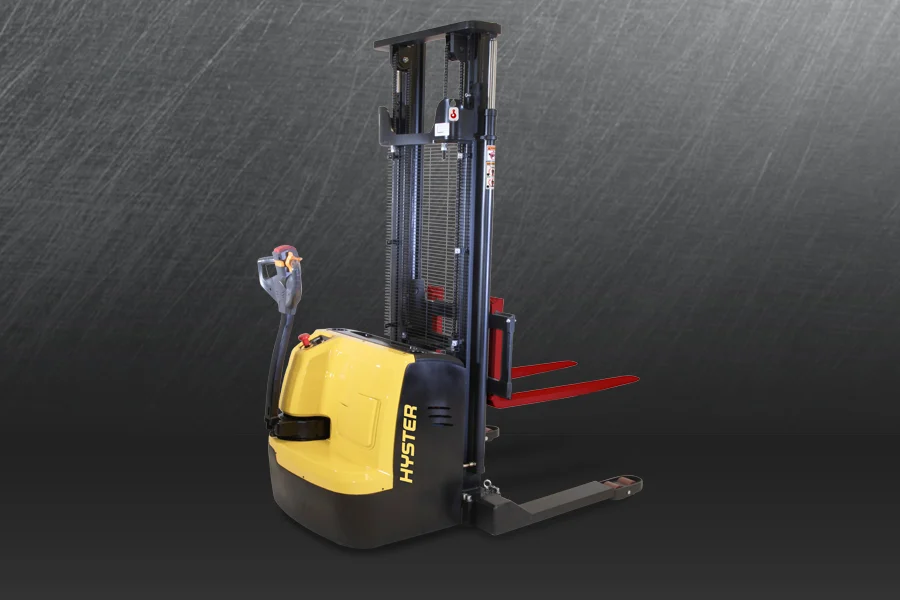
Transportation management teams assessing secondary market options face a critical decision. Bypassing professional evaluations is a gamble that directly threatens supply chain efficiency. Partnering with an authorized local dealer for certified preowned inventory remains the most financially and operationally sound strategy for long-term success.
*Please note that this list includes sponsored content. Some of the companies, products, or services featured have entered into commercial agreements for placement. Sponsored placements do not necessarily reflect an endorsement and should be considered alongside other options in the marketplace.