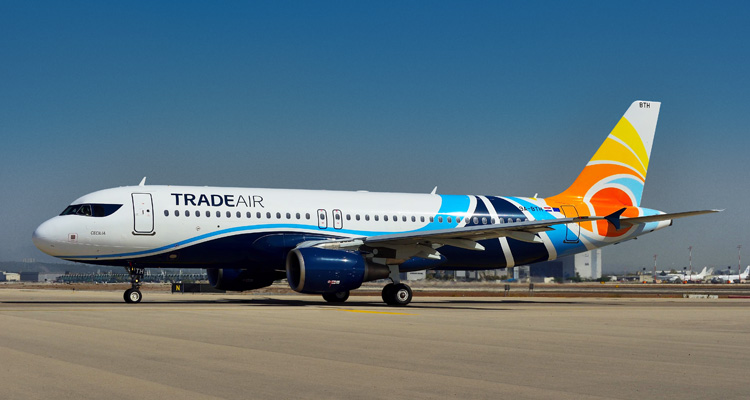
Trade Air adapts to aviation shifts through careful fleet decisions, charter growth, and a focus on long-term contracts
Across the aviation industry, growth is a balancing act. Airlines juggle rising fuel costs, global disruptions, supply chain headaches, and shifting passenger demand, all while trying to secure enough capacity for the next busy season. In today’s market, buying an aircraft isn’t the hard part. Making sure it has work lined up is. Timing really is everything.
Few leaders understand this better than Marko Cvijin. As Managing Director of Croatian carrier Trade Air, he has spent the last several years guiding the company through one of aviation’s most unpredictable eras. While some parts of the market shrank, Trade Air increased its Airbus A320 fleet, entered new markets, and boosted its ACMI and charter business. Still, Marko stays cautious about growing just for the sake of it.
“As a small company, we can’t just buy an aircraft, and hope business follows. We must put it to work right away. The worst thing is investing heavily in extra aircraft only to find there’s no work for them. That puts huge pressure on your finances, and if you run out of money, it’s game over. I take a conservative approach. I’d rather hold back than make a costly mistake,” Marko explains.
That caution has not stopped Trade Air from growing. It has just changed how growth happens. Founded in 1994 and based in Velika Gorica, Trade Air has grown from a regional charter operator into a partner for airlines, tour operators, and aviation companies across Europe and beyond. Today, Trade Air blends ACMI services, passenger charters, cargo flights, dangerous goods transport and scheduled domestic routes under Croatia’s Public Service Obligation program.
Many operators feel forced to choose between specialization and scale, but Trade Air takes a different path. The company’s real strength is keeping multiple business options open and staying nimble as market conditions shift.
The strategy proved especially valuable during the pandemic recovery. With uncertainty everywhere, the recovery became a turning point for Trade Air. “We slowly increased our fleet. In 2020, we had only two Airbuses, and now, five to six years later, we have five. We seized the opportunity when lessors and aircraft owners wanted to get rid of their planes on favorable terms. So, we acquired some units at favorable costs with favorable financing.”
Acquiring those extra planes changed everything for a company of Trade Air’s size. The larger fleet helped the airline pursue new business, better support current customers, and strengthen its ACMI services at a time when airlines everywhere were scrambling for planes.
The expansion wasn’t opportunistic. It was calculated. He didn’t jump in just because aircraft were available. He made the move because the numbers made sense. At Trade Air, expansion starts with demand, not with adding planes. When Slovenia’s national carrier, Adria Airways, collapsed, the team saw an opening. Demand didn’t go away; customers still needed capacity, and Trade Air quickly set up a base in Ljubljana. “We seized the opportunity, talked to their clients, and placed our aircraft there to take over the charter market,” Marko recalls.
That base is now a key part of Trade Air’s network, linking Slovenia with Greece, Turkey, and Egypt. More importantly, it shows how Trade Air grows: by identifying a market gap, understanding demand, and committing resources only when the business case is clear.
The same principle applies closer to home. For more than a decade, Trade Air has operated Croatia’s Public Service Obligation network, connecting smaller communities with domestic destinations. Using a Saab 340 based in Osijek, the airline provides services that support regional connectivity while adding an additional layer of diversification for the business. “It’s working fine. Sales are going well.”
Diversification is becoming increasingly important as the charter market evolves. Low-cost carriers are changing the picture. “Over the last few years, there has been an increasing presence of low-cost carriers, which is affecting the charter market. Charter flying will remain part of the industry for a long time, but I have a feeling the number of charter flights and overall capacity may gradually decline as low-cost airlines continue to expand. We also do a lot of ACMI work, so we operate a dual business model.”
That dual model sets Trade Air apart. Rather than relying on a single revenue stream, the business can shift its focus as conditions change. It’s a practical response to a market that has become harder to predict. However, unpredictability remains the defining challenge. Geopolitical events continue to affect routes and demand patterns. Airlines are reassessing capacity requirements heading into future seasons. “Presently, there is an escalation of fuel prices, which is affecting all,” Marko notes.
“Normally, ACMI operations are the first to slow down, and we’re already feeling that in the market. I expect the trend could accelerate through the winter. The market is very dynamic right now and currently moving in a negative direction, but I believe it’s temporary,” he adds.
For Marko, responding to those pressures requires discipline rather than reaction. That thinking is now shaping the company’s next phase of fleet planning. Trade Air’s newest A320 joined the fleet in 2025, but attention has turned toward replacing older aircraft and improving the fleet age profile. “We had planned replacement earlier, but for the last three years the market was at its peak, and there were no aircraft available. There was simply nothing on the market. Now, we’re looking to acquire a younger aircraft and replace our oldest unit so we can operate a younger fleet and strengthen our position in the market.”
The objective is not just to add capacity. It’s to make sure the fleet matches what customers need and where the market is headed. That’s why Trade Air’s priorities sit below the surface, not in the number of aircraft it flies, but in the contracts behind them.
In an aviation market where uncertainty has become a constant, that may be what sets Trade Air apart. The company keeps growing, but only when growth serves a purpose. Under Marko’s leadership, the focus stays on utilization before expansion, contracts before capacity, and preparation before risk. “We’re focused on securing long-term ACMI and charter contracts wherever possible and planning ahead, rather than finding ourselves in a position where we’re looking for work. The main thing is securing the right pricing and the right volume of business. That’s our target,” Marko concludes.