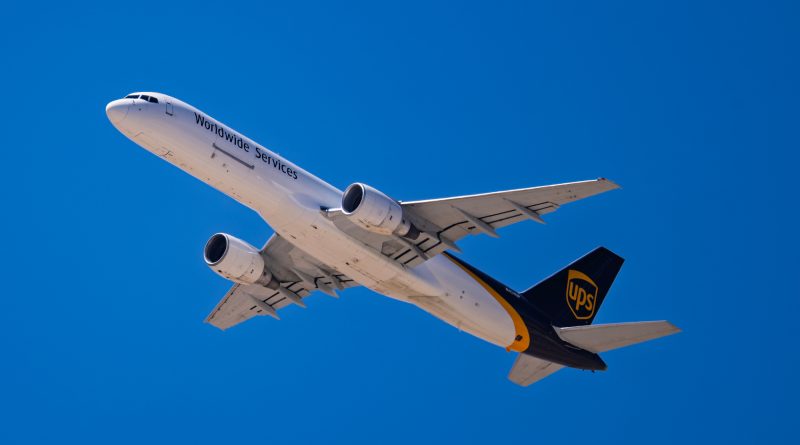
UPS expands global network with $2 billion logistics push
Subscribe to our free newsletter today to keep up to date with the latest transportation and logistics news.
UPS is investing more than $2 billion in its international logistics network as changing trade routes, new regulations and rising demand for high-value goods reshape global supply chains.
The investment program began in 2024 and will continue through 2028. It covers UPS’ International, Healthcare and Supply Chain Solutions businesses across Europe, Asia-Pacific and the Americas.
Projects include a new hub at Clark Airport in the Philippines, which is scheduled to open in the fourth quarter of 2026. UPS also plans to open a facility in Barrie, Ontario, in 2027 and a new air hub at Hong Kong International Airport in 2028.
The spending comes as global trade continues to grow despite greater uncertainty.
World merchandise trade volumes increased 3.2% year over year in the first quarter of 2026. However, the baseline outlook points to growth of 1.9% for the full year.
Global goods trade reached about $13.7 trillion in the first half of 2026, up 12.5% from the same period in 2025. Part of that increase reflected higher prices, including transport, energy and logistics costs.
For UPS, these conditions support the case for putting more capacity near major production centers and trade routes. They also reflect a wider shift in logistics. Customers increasingly want transport, customs services, storage and shipment data within a connected network.
UPS is putting capacity closer to changing trade flows
Much of the investment is focused on Asia-Pacific, where manufacturing, technology and healthcare supply chains are supporting demand for international freight.
UPS has expanded its Incheon air hub in South Korea and opened a technology-enabled logistics center in Taiwan. It is also adding capacity to its intra-Asia air network.
The carrier operates flights five times a week between Paris and Hong Kong and between Shenzhen and Sydney.
Those investments closely match recent changes in world trade.
East Asia led global goods trade growth during the first quarter of 2026. Technology-intensive products were among the strongest areas. Trade in semiconductors rose 25%, while trade in information and communications technology products increased 14%.
Air cargo figures show a similar pattern.
Global air cargo demand increased 8.5% year over year in June, while capacity grew 4.4%. Asia-North America air cargo demand increased 14.7%, traffic within Asia rose 7.2% and Europe-Asia demand increased 7.1%.
The figures help explain why logistics companies are adding capacity around Asian manufacturing centers while companies continue to review sourcing and production locations.
UPS is also expanding in North America. Its planned Barrie facility will add Canadian capacity, while the company has introduced time-definite heavy air freight services to and from Mexico.
Mexico has become an important part of North American manufacturing networks, particularly in automotive and industrial production. Better air connections can give manufacturers another option when road or ocean freight cannot meet production schedules.
Higher-value logistics is taking a larger role
UPS’ investment also points to a change in the type of freight that logistics companies want to handle.
Healthcare, high-tech products, automotive goods and industrial equipment are among the areas targeted by the program.
These shipments can require more than transportation. Healthcare products may need strict temperature control. Semiconductor and technology shipments can have high values and short delivery windows. Industrial manufacturers may need precise arrival times to keep production lines running.
UPS has invested in 27 temperature-controlled freight cross-dock facilities that connect air and ground movements while maintaining set temperature requirements.
Its Amsterdam Supply Chain Solutions facility also combines freight, customs brokerage and cold-chain services in one location.
Specialized logistics can provide another source of growth as traditional parcel markets change.
UPS reported $88.7 billion in revenue in 2025. Within Supply Chain Solutions, healthcare logistics provided some growth during a period when other parts of the division faced weaker demand.
That gives healthcare and other specialist services a larger role in the company’s network strategy.
The approach also reduces the separation between different stages of a shipment. Freight transport, brokerage, warehousing and final delivery can increasingly be managed through the same logistics provider.
For companies operating across several markets, this can reduce the number of providers involved in moving goods across borders.
Logistics networks are being designed for more than speed
Speed remains central to the UPS investment, but predictability is becoming just as important.
Supply chains face several sources of uncertainty. Trade policies are changing. Conflict continues to affect some transport corridors. Energy and freight costs can move quickly. Manufacturers are also adjusting sourcing and production locations.
These conditions are increasing demand for networks that can offer alternative routes when conditions change.
Recent air cargo data shows how uneven the market can be. Asia-North America traffic increased sharply in June, while Europe-Middle East routes contracted 41.1% as disruption affected the region.
That creates a different investment challenge for logistics companies. Adding capacity on one route may not be enough if demand shifts to another market or a transport corridor is disrupted.
Large operators are therefore combining aircraft, ground networks, distribution sites, customs services and shipment technology across regions.
UPS’ investment follows that approach. The company is adding physical capacity while expanding services designed to give customers more visibility over international shipments.
For manufacturers and other B2B shippers, logistics decisions are becoming more closely tied to sourcing, inventory and production planning.
The $2 billion program will run until 2028, so its full effect will take several years to become clear. Its geographic spread already indicates where UPS expects demand to develop.
Asia remains central to high-value manufacturing and technology trade. North American cross-border networks continue to develop. Healthcare logistics requires more specialist infrastructure.
As trade patterns change, logistics investment is increasingly focused on giving shippers more routing and service options. UPS’ latest spending plan shows how one of the world’s largest logistics companies is positioning its network for that shift.
Source