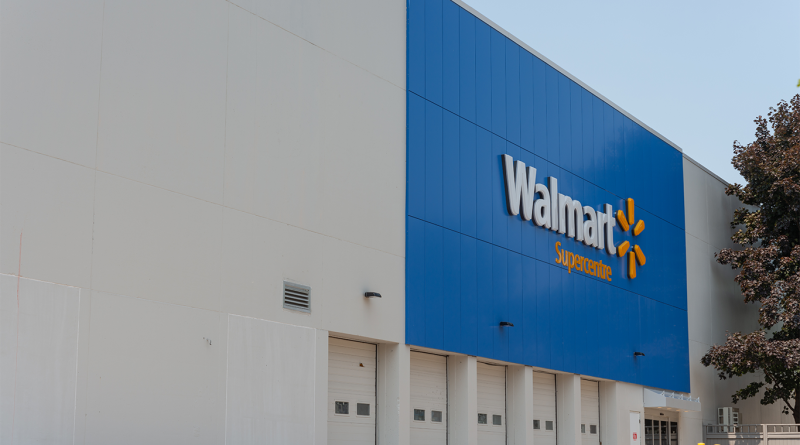
Walmart opens fifth next-generation fulfillment center in California
Subscribe to our free newsletter today to keep up to date with the latest transportation and logistics news.
Walmart has opened its fifth next-generation fulfillment center in Stockton, California, expanding its automated distribution network as the retailer seeks to improve shipping speeds, increase order capacity and strengthen its logistics operations across the West Coast.
The facility, which covers more than 900000 square feet, officially opened on Oct. 8 and uses advanced automation, machine learning and high-density storage technology to process online orders more efficiently. Walmart expects the operation to create more than 1000 jobs, including positions involving automated systems and other warehouse technologies.
Located in California’s Central Valley, the new Walmart fulfillment center forms part of a wider investment in supply chain modernization. The retailer is introducing automated processes across its distribution network to reduce manual handling, increase storage capacity and support growing demand for faster e-commerce deliveries.
The Stockton opening also reflects a broader development in the logistics industry, where large retailers are investing in automated fulfillment technology to increase throughput and manage increasingly complex distribution requirements.
Walmart’s automated fulfillment technology reduces manual processing
At the center of the Stockton operation is an automated, high-density storage and retrieval system designed to improve how products move through the warehouse. The technology brings merchandise directly to employees at designated workstations, reducing the need for workers to travel long distances throughout the facility to locate and retrieve individual items.
According to Walmart, the system reduces a traditional 12-step fulfillment process to five steps, eliminating several manual handling activities associated with order picking and processing.
The reduction represents a significant change in warehouse workflow, although the number of processing steps alone does not establish the extent of any improvement in overall productivity. Actual throughput depends on factors such as order volumes, equipment availability, inventory characteristics and the performance of surrounding operations.
Traditional fulfillment centers frequently depend on employees moving between storage locations, collecting products and transporting them to packing or sorting areas. Automated storage and retrieval systems reorganize that process by using mechanized equipment and software to locate, retrieve and deliver inventory to fixed workstations.
This approach can reduce unnecessary movement, improve inventory accessibility and allow employees to concentrate on tasks that are more difficult to automate, including product verification, exception handling and quality control.
High-density storage systems can also make more productive use of available warehouse space. By storing inventory in compact configurations and retrieving it through automated equipment, operators can increase storage capacity without relying exclusively on additional floor space.
When Walmart initially announced its next-generation fulfillment center program in 2022, the company projected that its technology could double storage capacity and the number of customer orders processed each day compared with traditional facilities.
Its latest Stockton announcement describes improvements in storage and daily fulfillment capacity but does not provide site-specific figures showing whether those earlier projections have been achieved.
The distinction matters for logistics operators assessing similar investments. Improvements in individual processes do not automatically translate into equivalent gains across an entire facility, particularly when upstream replenishment, downstream packing and outbound transportation must operate at compatible speeds.
Walmart’s approach illustrates how warehouse automation is increasingly being applied to the movement and presentation of goods rather than attempting to eliminate human involvement throughout the fulfillment process.
The Stockton facility expands Walmart’s West Coast distribution capacity
The Stockton fulfillment center strengthens Walmart’s distribution network in a region where geographic coverage, transportation distances and delivery expectations influence the economics of e-commerce fulfillment.
Situated in California’s Central Valley, Stockton provides access to major population centers across Northern California and connections to broader West Coast transportation networks. Its location allows Walmart to position additional inventory closer to customers rather than depend entirely on facilities situated farther inland.
Reducing the distance between inventory and final delivery destinations can help retailers improve shipping times and manage transportation costs, particularly when regional facilities carry products that are frequently ordered by local customers.
The Stockton operation joins Walmart’s other next-generation fulfillment centers in Joliet, Illinois; McCordsville, Indiana; Greencastle, Pennsylvania; and Lancaster, Texas. The retailer has also outlined plans for another automated fulfillment facility in Georgia, extending the geographic reach of its expanding network.
The company’s investment reflects the growing importance of regional inventory positioning as retailers compete on delivery availability and speed. Warehouse automation supports this strategy by allowing facilities to process more orders within the operational windows required by transportation carriers.
Walmart says its next-generation fulfillment centers, operating alongside its wider fulfillment network, will allow the retailer to reach 95% of the US population with next-day or two-day shipping.
That figure applies to the combined network rather than the Stockton facility independently. The company’s ability to meet those delivery commitments will continue to depend on inventory availability, order processing times, transportation capacity and customers’ locations.
The new facility will also support Walmart Fulfillment Services, the retailer’s third-party logistics operation for merchants selling through Walmart Marketplace.
By providing fulfillment capacity for third-party sellers, Walmart can use its distribution infrastructure to support merchandise beyond its directly owned inventory. This creates another source of demand for warehouse capacity and connects the company’s logistics investments more closely with its expanding e-commerce marketplace.
For retailers and logistics providers, the development demonstrates the commercial value of combining regional fulfillment infrastructure with automated inventory processing. Distribution centers increasingly serve multiple sales channels, placing greater demands on inventory accuracy, system coordination and the ability to handle varied order profiles.
Warehouse automation changes labor requirements and operational priorities
The Stockton opening highlights the changing relationship between warehouse automation and employment as distribution operators introduce increasingly sophisticated material handling systems.
Walmart expects the facility to support more than 1000 jobs and has identified technology-focused positions among the opportunities available as operations expand. Local reporting following the opening indicated that more than 1000 employees had already been hired.
The company says automation will reduce repetitive physical tasks and provide employees with opportunities to develop technical skills. In practical terms, automated fulfillment environments require workers who can operate equipment, monitor system performance, address exceptions and support maintenance activities.
These requirements can change the composition of warehouse labor, with greater emphasis on technical troubleshooting, equipment reliability and the coordination of automated and manual workflows.
The transition also introduces operational challenges. Automated storage systems require substantial initial investment, continuous maintenance and integration with warehouse management software, inventory databases and transportation processes.
Equipment failures can interrupt interconnected warehouse activities, while software disruptions or inaccurate inventory records can affect the performance of systems that depend on synchronized movements.
Recent reporting by The Wall Street Journal has examined the technical difficulties Walmart has encountered in its broader warehouse automation program, including the challenge of automating tasks that employees can perform relatively easily, such as handling products with different shapes, weights and packaging characteristics.
Walmart’s Stockton investment comes as retailers face continued pressure to provide faster delivery without allowing fulfillment costs to undermine profitability. Greater automation offers a potential route to higher capacity, but its effectiveness depends on how successfully technology is incorporated into existing supply chain operations.
The opening of Walmart’s fifth next-generation fulfillment center extends that strategy to the West Coast, adding a major automated facility to a distribution network increasingly organized around speed, storage density and flexible order processing.
For the wider logistics industry, the significance lies not simply in the introduction of another automated warehouse, but in the growing expectation that large fulfillment operations must combine advanced technology, skilled employees and strategically located inventory to meet the demands of modern retail distribution.
Source:
Progressive Grocer