Waymo raises the stakes in the global robotaxi race
Subscribe to our free newsletter today to keep up to date with the latest transportation and logistics news.
Waymo is preparing to launch a fully autonomous commercial ride-hailing service in Tokyo in 2027, giving the company its clearest test yet of whether its US robotaxi lead can translate to an overseas market.
The Alphabet-owned company has agreed with Japanese taxi operator Nihon Kotsu and mobility platform GO to prepare for the launch. The plan remains subject to regulatory approval and further testing. Waymo intends to start with an initial fleet before expanding to around 100 vehicles in key Tokyo neighborhoods.
The significance extends beyond Japan.
Waymo has spent much of the past two years expanding its US network. It now says it provides more than half a million autonomous trips each week and serves riders in 15 US cities.
Tokyo presents a different challenge. Its dense streets, narrow neighborhood roads, large pedestrian volumes and established transport network will test whether Waymo can repeat its US expansion model under different operating and regulatory conditions.
It will also provide another measure of the company’s position against Tesla and Amazon-owned Zoox.
Competition in robotaxis is growing. Tesla now offers autonomous Robotaxi rides in several US cities, while Zoox is developing its service around a purpose-built autonomous vehicle. Waymo, however, enters this stage with years of commercial operating experience and a much broader service network.
Waymo is turning an early lead into an operating network
Waymo’s Tokyo announcement came during one of the fastest periods of expansion in the company’s history.
On Sept. 1, it began welcoming public riders in Denver, San Diego and Tampa. Those additions brought its fully autonomous operations to 14 US cities at the time.
Las Vegas followed on Sept. 14, taking the total to 15.
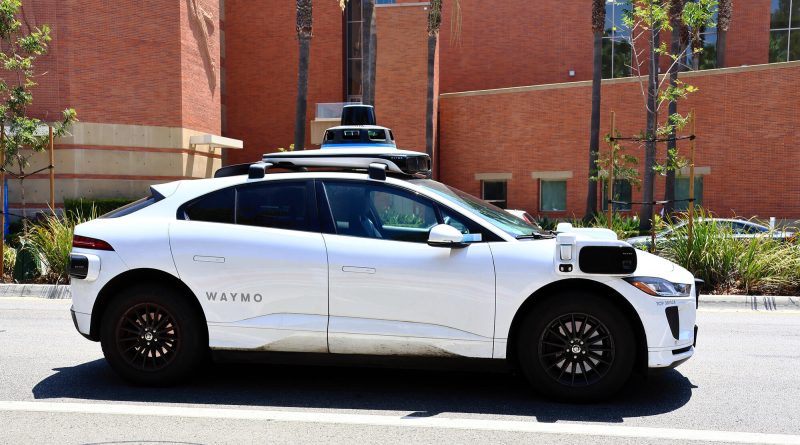
The expansion has also increased the size of Waymo’s fleet. By the start of September, the company had more than 4,000 autonomous vehicles, including Jaguar I-Pace vehicles and its newer Ojai minivan.
About 300 Ojai vehicles were operating at that point.
The Ojai is important because the robotaxi contest is becoming an industrial challenge as well as a software and engineering challenge.
It uses Waymo’s sixth-generation autonomous driving system and is designed to cost less to build, operate and maintain than earlier vehicles. Denver and San Diego are among the first markets where the vehicle is being used for passenger service.
Those costs will matter more as fleets grow.
Waymo has also developed a repeatable process for entering cities. It usually begins with mapping and supervised testing. Human safety operators are later removed, followed by access for selected riders and eventual commercial service.
That process gives the company experience across a growing range of traffic conditions.
Autonomous vehicles need to deal with more than routine driving. Construction, road closures, unusual behavior from other road users and local street design can create situations that are difficult to predict before entering a market.
Every additional city gives Waymo more operating data while testing whether its technology can handle different conditions.
Tokyo takes that challenge further.
Waymo has operated vehicles in the city since 2025, with trained Nihon Kotsu crew members involved as the technology is tested and validated. The company says its vehicles have encountered narrow neighborhood roads and dense crowds during the program.
A commercial launch would put that work into practice on a larger scale.
Tesla and Zoox are making the robotaxi race less predictable
Waymo’s expansion does not mean the market is settled.
Tesla currently offers autonomous Robotaxi rides in Austin, Dallas, Houston, Miami, Orlando and Tampa. Its Model Y supports much of the network, while Cybercab rides are available in limited parts of Austin.
The company is taking a different technical and commercial approach from Waymo.
Waymo uses cameras, lidar and radar to understand its surroundings. Tesla has relied more heavily on cameras and artificial intelligence. The two companies are therefore testing different ideas about how autonomous driving should be developed and deployed.
Tesla also has manufacturing scale on its side.
If it can expand its autonomous service reliably, its existing vehicle production base could become a significant advantage. Waymo has built a larger robotaxi operation, but it does not manufacture passenger vehicles at Tesla’s scale.
Zoox offers another model.
The Amazon-owned company has designed a vehicle specifically for autonomous ride-hailing rather than adapting a conventional passenger car. It has already opened its robotaxi service to public riders in Las Vegas, putting it in direct competition with Waymo in the city.
The next stage of the market will depend on more than proving that a vehicle can drive without a human behind the wheel.
Companies must show that they can run large fleets safely and reliably while keeping costs low enough to support a viable transport service.
Waymo currently has the strongest record of broad commercial deployment among the main US operators. Its larger city network, growing fleet and trip volumes give it more operating history than its closest rivals.
The harder task is repeating that performance as the network grows.
Tokyo could show whether Waymo’s advantage travels
Tokyo may provide a more revealing test of Waymo’s position than another US launch.
The city combines heavy traffic with narrow roads, high pedestrian volumes and a mature public transport and taxi network. Waymo must also meet Japanese regulatory requirements and local service expectations.
Its partnerships with Nihon Kotsu and GO are central to that approach.
Customers are expected to be able to request autonomous Waymo trips through both the Waymo and GO apps. Nihon Kotsu contributes local taxi and fleet experience, while GO already connects passengers with transport services across Japan.
The arrangement could also offer a model for expansion into other countries.
Instead of building every part of a local transport operation itself, Waymo can provide its autonomous driving technology while working with companies that already understand local customers, regulations and fleet operations.
That could become increasingly important as its international plans grow. Waymo has also announced plans to enter London and Munich.
The company has therefore reached a new stage in the autonomous vehicle race.
For years, the main question was whether driverless technology could work well enough to carry paying passengers. The next test is whether it can operate across many cities at a cost that supports a large transport business.
Tesla and Zoox still have credible ways to narrow the gap. Different technology choices, vehicle designs and manufacturing models could change the economics of robotaxis as the sector develops.
For now, Waymo has an advantage that cannot be created quickly: years of commercial operating experience across an expanding network.
Tokyo will test how valuable that experience becomes when the roads, regulations and transport market are no longer American.
Source