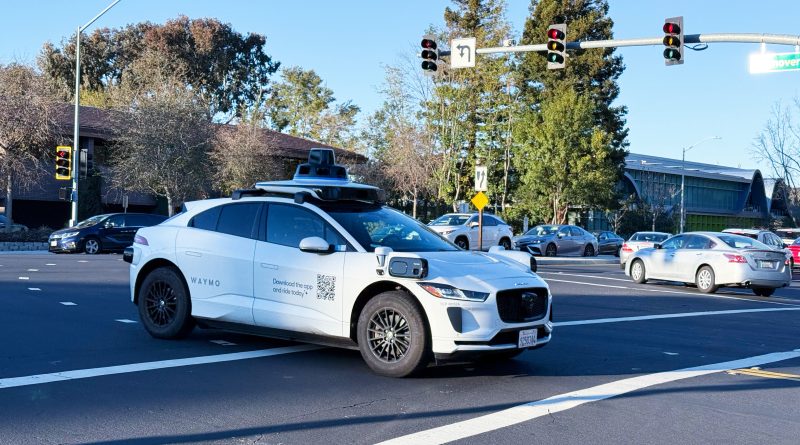
Waymo’s flood recall shows robotaxis still struggle with judgment
Subscribe to our free newsletter today to keep up to date with the latest transportation and logistics news.
Waymo’s latest recall is not just a software event. It is a reminder that autonomous vehicles are moving from controlled technical achievement into the messier world of public infrastructure, changing weather and split-second risk judgment.
The Alphabet-owned robotaxi company recalled 3,791 vehicles after a Waymo vehicle entered a flooded roadway in San Antonio on April 20, according to filings with the National Highway Traffic Safety Administration. The vehicle was unoccupied and no injuries were reported, but the system had detected the flooded road and still continued into the water at a reduced speed.
For an industry built on the promise that software can make mobility safer, the incident is awkward. Floodwater is not an obscure hazard. Human drivers are repeatedly warned not to enter it because depth, road surface and current are difficult to judge from the driver’s seat. For an autonomous system, the problem is harder. Cameras, lidar, radar, maps and prediction models can identify a hazard, but the central question is whether the vehicle can interpret the scene conservatively enough when the safest choice is to stop or reroute.
The recall is small in market terms, but large in strategic meaning
Waymo’s recall covered fifth- and sixth-generation automated driving systems, according to NHTSA documents and subsequent reporting. The company said it added operational restrictions after the April 20 event and its safety board decided on April 24 to conduct a recall.
The numbers matter because they reveal the scale of Waymo’s current US operation. A fleet of 3,791 vehicles is still modest compared with conventional ride-hailing networks, but it is large enough that rare failures are no longer hypothetical. When autonomous vehicles run across multiple cities, they encounter more weather, more road damage, more emergency scenes and more unusual human behavior.
That is the central challenge for robotaxi companies. Scaling does not simply mean adding cars. It means multiplying exposure to edge cases.
Flooded roads are a particularly unforgiving example. Standing water can obscure lane markings, curbs, potholes and the boundary between road and drainage channel. It can reflect light in ways that complicate perception. It can also change rapidly, especially during flash flooding. In San Antonio, local reporting said the vehicle was swept away and later recovered downstream.
Weather is becoming a commercial risk for driverless fleets
The autonomous vehicle sector has long framed safety as a statistical comparison with human drivers. That argument remains powerful, particularly as companies publish crash and insurance data. But public confidence is often shaped by vivid incidents rather than aggregate performance.
A robotaxi that stops too cautiously may frustrate riders. A robotaxi that proceeds into floodwater creates a different problem: It suggests the system may recognize danger without fully understanding it.
That distinction is commercially important. Robotaxi operators are not just selling trips. They are asking cities, regulators, insurers and passengers to accept software as a licensed road user. Each recall becomes part of that negotiation.
Waymo has said it is refining extreme-weather operations, adding safeguards and limiting access to areas where flash flooding may occur, according to reports citing the company and NHTSA documents.
Those changes point to a likely future for autonomous fleets. Companies will rely less on universal driving capability and more on dynamic operating boundaries. In practice, that means robotaxis may become increasingly selective about where and when they operate. Heavy rain, flooded corridors, construction zones and emergency activity could trigger automatic restrictions.
The industry’s next test is not autonomy, but restraint
The Waymo recall does not mean driverless vehicles are failing. It means the industry is entering a more serious phase, where success depends on restraint as much as performance.
For logistics, manufacturing and mobility executives watching the sector, the lesson is broader than passenger transport. Automation works best when systems know their limits. The hardest failures often occur not when machines cannot detect a problem, but when they detect one and still take the wrong action.
That is why this recall matters. It shifts the conversation from whether autonomous vehicles can drive to whether they can decide when not to drive.
As robotaxi fleets expand, regulators are likely to demand more transparency around weather protocols, remote intervention, software updates and operational design domains. Cities may also require closer coordination between flood mapping, emergency alerts and autonomous fleet routing.
The commercial opportunity remains significant. Driverless mobility could lower labor constraints, expand service availability and create new transportation models. But the path to that future will be shaped by incidents like this one. Not because they prove the technology is unsafe, but because they show how much judgment still needs to be engineered into it.
Source