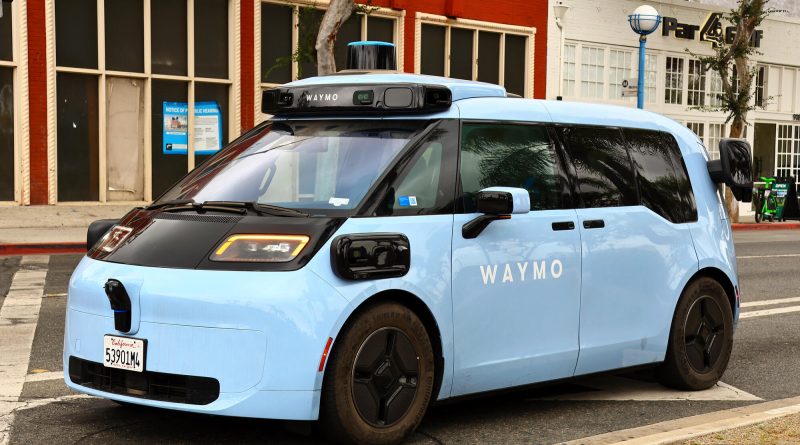
Waymo’s Las Vegas airport launch puts robotaxis at the curb
Subscribe to our free newsletter today to keep up to date with the latest transportation and logistics news.
Waymo has started offering robotaxi rides to and from Harry Reid International Airport in Las Vegas, adding an airport the company describes as one of the busiest in the US to its autonomous ride-hailing network.
The service launched on Oct. 21, with pickups and drop-offs at dedicated autonomous vehicle zones on the Ground Zero Level of Terminal 1 and Terminal 3. Access is limited at first. Existing Waymo riders in Las Vegas can now book airport trips, and the company plans to bring in more riders gradually before opening the service to everyone.
From the airport, riders can travel anywhere within Waymo’s current 24-square-mile Las Vegas service area. The company says it plans to cover more of the region over time.
Harry Reid International is Waymo’s sixth major airport, joining Phoenix Sky Harbor, Nashville International, San Antonio International, San Francisco International, and San José International.
What Waymo has not shared is just as telling. The announcement gives no ride volumes, no fleet numbers for the airport, and no date for opening access to all riders.
Airports are becoming a proving ground for robotaxi operators
Airport trips are an attractive prize for any ride-hailing business. Demand is steady, journeys tend to be longer than a typical city hop, and many passengers arrive with luggage and no car of their own.
For autonomous operators, airports are also among the hardest places to work. Curbs are crowded, traffic patterns change through the day, and vehicles share space with taxis, shuttles, private cars, and pedestrians who are often distracted. Operators also need permission from the airport itself, not just from state or city regulators.
That makes the dedicated pickup zones an important detail. Instead of competing for curb space with every other vehicle, Waymo’s cars will use set areas at both terminals. The model gives the airport more control over how autonomous vehicles fit into its wider ground transportation operation.
The airport appears open to the idea. James C. Chrisley, Clark County Director of Aviation, said: “We serve millions of passengers every year, and as new technologies continue to evolve, we’re always looking for ways to bring new options and added convenience to our travelers.”
Las Vegas gives the airport strategy extra weight. The city’s economy runs on visitors, and Waymo has been building local ties beyond the terminals. It is the official ride-hailing partner of the Las Vegas Raiders and Allegiant Stadium and has a partnership with The Venetian Resort.
An airport connection links those destinations to the point where many visitors begin their trip.
Las Vegas is shaping up as a crowded robotaxi market
Waymo is not alone at Harry Reid International.
Amazon-owned Zoox already offers rides at the airport. That puts 2 of the leading US robotaxi developers in direct competition at the same terminals, giving travelers a rare chance to compare services side by side.
More competition is on the way. In August, Nevada regulators approved permits that could allow Tesla and Uber to put thousands of robotaxis on the city’s streets over the next year.
If those fleets arrive at scale, Las Vegas could become one of the clearest tests yet of how autonomous services compete for the same customers. Riders will be able to judge operators on wait times, reliability, and price, and airports are where those differences will show most quickly.
For each operator, airport access is worth securing early. A presence at the curb, an established pickup process, and a working relationship with airport management are hard for a late entrant to replicate quickly.
Waymo’s October expansion points to a wider network strategy
The Las Vegas airport launch is one of several announcements Waymo has made this month. On Oct. 14, it opened its service to all riders in San Antonio, San Diego, and Tampa, including rides at San Antonio International Airport. It has also said it is laying the groundwork for service in Toronto and in the Region of Madrid in Spain.
The pace suggests a company shifting from proving its technology city by city to building a broader transport network, with airports as anchor points within it.
Several questions remain open. Waymo has not said how many vehicles will serve the airport, how quickly it will widen access, or when its service area will grow to cover more of the Las Vegas region. Those answers will show whether airport rides become a core part of Waymo’s business in the city, or remain a limited option while rivals build their own fleets.
Sources:
Waymo
TechCrunch