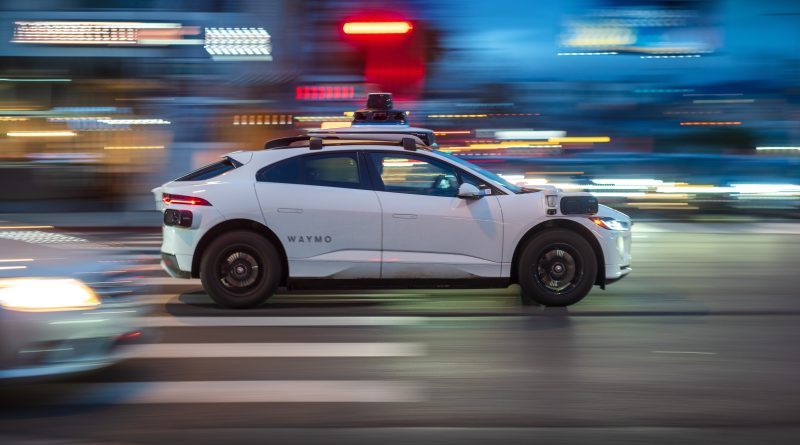
Waymo’s subscription push marks a new chapter for robotaxis
Subscribe to our free newsletter today to keep up to date with the latest transportation and logistics news.
For years, Waymo has occupied a distinctive position in the autonomous vehicle sector. While competitors focused on pilot programs and testing milestones, Alphabet’s self-driving division steadily expanded commercial operations across major US cities. The launch of Waymo Premier, a new subscription membership for frequent riders, suggests the company has entered a new stage of development.
The program offers members priority pickups, 10% cashback on rides, access to new service areas and a limited number of free cancellations for a monthly fee of $29.99. On the surface, the offering resembles loyalty programs that have become common across transportation, retail and entertainment. The broader significance lies in what it reveals about Waymo’s commercial ambitions.
The company is no longer focused solely on demonstrating that autonomous vehicles can operate safely at scale. It is increasingly focused on proving that autonomous transportation can become a sustainable business.
Waymo is moving beyond autonomous technology and into customer economics
The autonomous vehicle industry has long been measured by technological achievements. Companies competed on safety records, miles driven and software capabilities. Those accomplishments remain important, but they do not automatically create durable businesses.
Waymo’s recent growth suggests the company is beginning to address both sides of the equation. It now provides roughly 500,000 paid rides each week across its operating markets. As the network expands into additional cities, the challenge becomes less about attracting first-time riders and more about encouraging repeat usage.
That is where Waymo Premier becomes significant.
Subscription models create predictable revenue streams while strengthening customer loyalty. Airlines, streaming platforms and ride-hailing companies have all used memberships to deepen engagement with frequent users. Waymo appears to be applying a similar strategy to autonomous mobility.
Priority pickup could prove particularly valuable during periods of high demand when vehicle availability becomes constrained. Riders who use robotaxis regularly for commuting or everyday travel may find enough value in reduced wait times to justify a monthly fee. The cashback incentive creates an additional reason to keep journeys within the Waymo network.
The strategy reflects growing confidence that a meaningful share of customers now view autonomous transportation as a practical service rather than a one-time experience.
Why recurring revenue could become central to robotaxi economics
The economics of autonomous mobility remain under scrutiny. Removing the human driver has the potential to improve long-term operating efficiency, but building and maintaining autonomous fleets requires significant investment in vehicles, software, mapping and infrastructure.
As robotaxi networks expand, recurring revenue becomes increasingly attractive.
Traditional ride-hailing businesses rely heavily on transaction-based revenue. Every trip requires a new purchasing decision. Membership programs alter that dynamic by creating an ongoing commercial relationship between provider and customer.
For Waymo, subscriptions could offer several advantages.
They may increase ride frequency, improve demand forecasting and provide a more stable revenue base as new markets launch. Memberships also create opportunities to better understand rider behavior and travel patterns.
The approach mirrors developments across the technology sector, where companies increasingly prioritize recurring revenue and customer retention. Waymo’s decision suggests executives believe autonomous transportation has reached a level of maturity that can support this model.
Alphabet is increasingly connecting mobility to its broader AI strategy
Waymo’s evolution also reflects a wider shift taking place within Alphabet.
For much of its history, Alphabet’s growth was closely tied to digital advertising and search. Today, investors are increasingly evaluating the company’s ability to commercialize artificial intelligence across multiple industries.
Cloud computing, generative AI, search and autonomous mobility now form part of that strategy.
Waymo occupies a distinctive position because it transforms AI from a digital capability into a physical service. Every autonomous journey depends on machine learning, real-time decision-making and large-scale computing infrastructure.
The launch of Waymo Premier highlights how Alphabet may continue developing direct customer relationships through mobility services. As the company expands into new markets, those relationships could become increasingly valuable.
Recent investment activity and valuation discussions surrounding Waymo indicate growing confidence that autonomous transportation could become one of Alphabet’s most significant businesses outside its traditional advertising operations.
The introduction of a premium membership program strengthens that narrative by providing a clearer route to customer monetization.
What Waymo Premier may reveal about the future of urban transportation
Subscription services often emerge when products move from early adoption to routine use.
Streaming platforms introduced memberships as digital entertainment became mainstream. Software companies embraced recurring subscriptions as cloud computing matured. Waymo’s latest move may represent a comparable moment for autonomous transportation.
The implications extend beyond a single membership program.
As robotaxi networks expand, operators are likely to compete on customer experience, convenience and reliability as much as technological capability. Features such as priority access, rewards and premium service tiers may become increasingly common.
That would represent a significant shift for the industry.
Future success will depend not only on developing safe autonomous vehicles but also on creating transportation services that riders choose repeatedly. Companies capable of achieving both objectives are likely to hold an advantage as autonomous mobility expands.
Waymo Premier does not guarantee that outcome. It does, however, suggest the company believes autonomous transportation is entering a phase where customer loyalty and retention will carry greater strategic importance. For an industry long defined by technological milestones, that may be one of the more consequential developments of the year.
Source