What’s the Best Anti-Gel Additive for Diesel Fuel? Consider These 3 Options
A gelled fuel line can bring an entire fleet to a standstill in minutes. When winter temperatures drop, paraffin wax in diesel fuel hardens into a gel that can block filters and starve engines. A single frozen morning can cost thousands in lost deliveries and emergency service calls.
The best anti-gel additives for diesel fuel prevent this problem before it starts by keeping the fuel flowing smoothly even in extreme cold.
Understanding Anti-Gel Additives
Diesel powers heavy machinery. However, the fuel can become unusable in cold climates due to fuel gelling. The paraffin wax naturally present in diesel hardens and binds together in cold temperatures, obstructing fuel lines and making engines difficult to start.
The process begins at the cloud point, the temperature at which wax crystals start to fall out of suspension and become visible in the fuel. As temperatures continue to drop, these crystals bind together and form a gel structure that clogs fuel filters, which is why operators need to treat fuel before temperatures drop.
What Is the Best Anti-Gel Additive for Diesels?
Choosing the best anti-gel additive for diesel engines helps protect against winter breakdowns. The top options combine advanced wax modifiers and deicers to keep engines running smoothly in freezing temperatures.
1. Hot Shot’s Secret
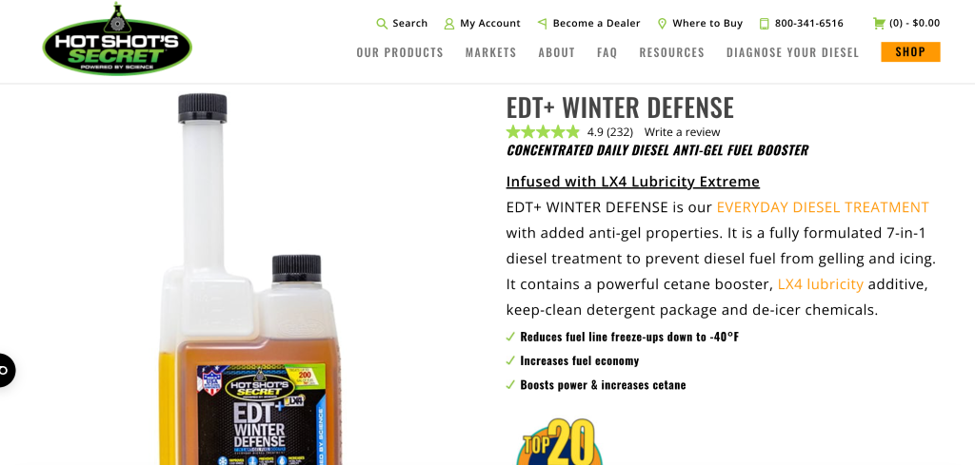
Hot Shot’s Secret EDT+ Winter Defense stands out as the best anti-gel additive for diesels with dual-action protection that prevents both gelling and icing while delivering performance improvements across multiple areas. This 7-in-1 diesel treatment uses a military-grade deicer, preventing fuel filters from plugging down to extreme freezing temperatures.
It delivers comprehensive protection that addresses multiple winter fuel challenges in a single treatment. Hot Shot’s Secret consistently ranks as a top-tier choice for its combined performance in anti-gelling and lubricity.
Key features:
- Cold weather protection: Prevents precipitation of paraffin wax and enables fuel to pass through filters
- Performance enhancement: Increases fuel economy and power through cetane improvement with special nitrates that speed up oxidative processes during combustion
- System protection: Prevents the formation of sludge
2. Stanadyne
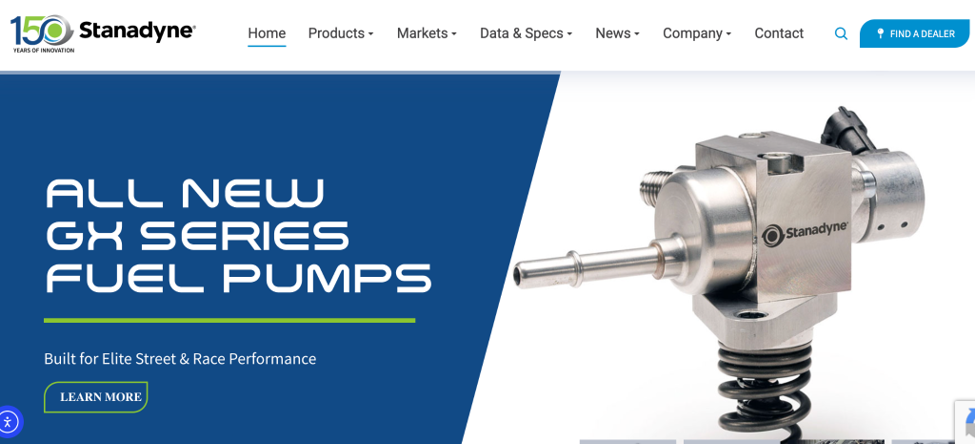
An injection system manufacturer developed Stanadyne Performance Formula as an all-season additive after seeing fuel system damage from the inside through rebuild operations. The company gains direct insight into varnish deposits, scored plungers, carbon-packed nozzle tips and corroded check valves.
Authorized dealers test the injectors that this additive protects. Because of its OEM-developed lubricity package, it is often recommended to protect the sensitive CP4 high-pressure fuel pumps found in many modern diesel trucks.
Key features:
- OEM-developed formula: Engineers who rebuild injection systems created this formula and understand firsthand what fuel does to pumps and injectors
- Year-round capability: The Performance Formula works for all seasons
- Proven results: Testing consistently shows better spray patterns and cleaner injector internals
3. Howes
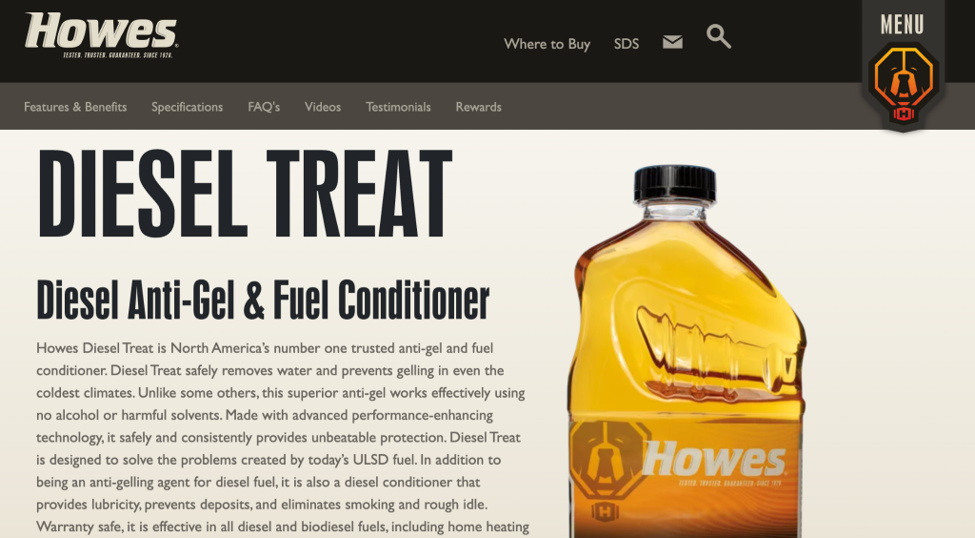
Howes Diesel Treat offers a highly accessible and popular option that safely removes water and prevents gelling with an alcohol-free formula. The product works effectively without harsh solvents while relying on advanced performance-enhancing technology to deliver results across multiple challenges that transportation professionals face with modern diesel fuel formulations.
Its widespread availability at truck stops and auto parts stores across the country makes it a trusted and convenient choice for operators needing reliable, on-the-road protection.
Key features:
- Alcohol-free protection: Uses no alcohol or harmful solvents while still preventing gelling effectively in extreme cold
- Multi-function treatment: Functions as both an anti-gel and diesel conditioner that offers lubrication, prevents buildup and reduces smoke
- Deposit prevention: Includes a targeted detergent package that lessens fuel injector deposits, which can lead to engine and performance issues
Methodology for Ranking Additives
The best anti-gel additives for diesels meet the following criteria:
- Cold-filter plugging point reduction: The ability to prevent paraffin wax crystals from blocking fuel filters, directly impacting whether engines can draw fuel during cold weather
- Preventive performance: Effectiveness when added to liquid fuel before temperatures drop below 32° Fahrenheit to modify wax crystals and prevent them from chaining together
- Deicing power: The capability to dissolve wax crystals and melt ice blockages in filters and lines after an engine has stalled
- Lubricity protection: Defense for high-pressure fuel pumps and injectors against increased wear common with ultra-low sulfur diesel
- Water dispersal: Capacity to manage and disperse moisture in the tank to prevent ice formation in fuel lines
- Dosage efficiency: The amount of fluid required per gallon of diesel to achieve protection, balancing cost-effectiveness with performance
Comparative Summary Table of Top Options
This quick-reference comparison chart helps fleet managers evaluate anti-gel additives for diesels at a glance.
| Company | Lowest Temperature Protection | Cetane Boost | Deicing Capabilities | Alcohol-Free |
| Hot Shot’s Secret | Minus 40° Fahrenheit | Yes | Military-grade | Yes |
| Stanadyne | Moderate, Winter 1000 for extreme cold | 3-5 cetane points | Yes | Yes |
| Howes | Extreme cold | No | Yes | Yes |
Frequently Asked Questions
Here are the most commonly asked questions about anti-gel additives.
Q: What is the best anti-gel additive for diesels?
A: Hot Shot’s Secret EDT+ Winter Defense is the top overall choice for extreme temperatures, combining anti-gel protection with performance benefits, including enhanced lubricity. Stanadyne Performance Formula and Howes Diesel Treat also offer strong protection for different operational needs.
Q: When should one use a gel inhibitor in diesel engines?
A: Add anti-gel additives to the tank before the fuel reaches its cloud point, which occurs near freezing temperatures. Treating fuel proactively before cold weather arrives is essential because these products prevent gelling but cannot reverse it once wax crystals have fully formed and bound together.
Q: How does diesel fuel gel in cold weather?
A: Paraffin wax solidifies and clogs filters and fuel lines in cold weather. The process begins at the cloud point, when wax crystals precipitate from suspension and the solidifying wax continues to solidify as temperatures drop, with crystals connecting into a gel structure that blocks fuel flow.
Protect Diesel Engines This Winter
Winterizing diesel fuel maintains fleet logistics and prevents the costly scenario of wax crystals solidifying and clogging fuel systems during extreme weather. Transportation professionals who stock up on anti-gel additives for diesel engines before the winter freeze hits protect their operations from costly downtime and service delays.
The difference between a fleet that runs smoothly through winter and one that faces repeated cold-weather failures often comes down to consistent preventive treatment.
*Please note that this list includes sponsored content. Some of the companies, products, or services featured have entered into commercial agreements for placement. Sponsored placements do not necessarily reflect an endorsement and should be considered alongside other options in the marketplace.