World’s largest battery electric ship begins harbor trials in Tasmania
Subscribe to our free newsletter today to keep up to date with the latest transportation and logistics news.
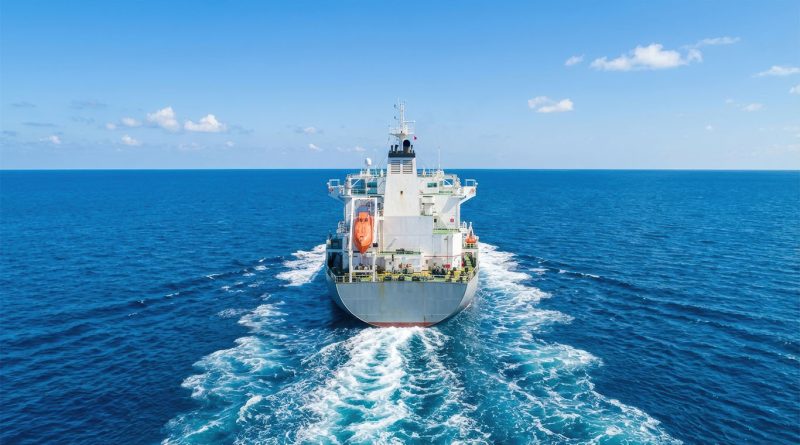
A 130 metre vessel has quietly shifted the trajectory of commercial maritime transport. Hull 096, built by Incat Tasmania, began harbour trials on the River Derwent, becoming the largest battery electric ship ever to move under its own propulsion.
The milestone marks the first time a vessel of this scale and passenger vehicle capacity has operated solely on battery power. For an industry under mounting pressure to decarbonise, the significance extends far beyond southern Australia.
“This is the moment where the ship truly comes alive,” Incat Chairman Robert Clifford said as the vessel undertook its first controlled movements. “Moving Hull 096 under its own battery electric power is a world first at this scale and confirms that electric propulsion is viable for large commercial vessels.”
The harbour trials signal the transition from construction to operational testing, a phase that will determine how convincingly electric propulsion can perform in real world commercial conditions.
Testing the limits of large scale electric propulsion
Harbour trials are a structured process. Crews test propulsion systems, manoeuvrability, control integration and onboard operational performance. For Hull 096, those tests carry added scrutiny. Scaling battery systems to power a vessel of 130 metres represents a technical leap for shipbuilders accustomed to diesel driven ferries and hybrid systems.
Unlike smaller electric craft that operate on short commuter routes, Hull 096 is designed for significant passenger and vehicle throughput. Its propulsion system must deliver not only emissions free movement but also reliability, redundancy and performance consistent with commercial ferry operations.
Engineers will evaluate how propulsion and steering respond under varying loads, how energy management systems balance power demand, and how onboard systems interact when running entirely on battery supply. The objective is not symbolic success but operational proof.
Electric propulsion at this size requires extensive battery capacity, advanced power management and thermal control systems capable of sustaining high output without compromising safety. The trials will test those systems in dynamic harbour conditions where wind, current and vessel traffic introduce variables that static dockside testing cannot replicate.
The fact that the vessel has now moved under its own stored energy demonstrates that large scale electrification is no longer theoretical. It is operational.
A signal to a decarbonising maritime industry
Shipping accounts for a significant share of global greenhouse gas emissions, and regulators and cargo owners alike are pressing operators to accelerate decarbonisation. While alternative fuels such as methanol and ammonia remain under development, battery electric propulsion offers a commercially available pathway for specific routes, particularly high frequency ferry services.
Hull 096 represents a case study in how established shipbuilders are adapting to that shift. Incat Tasmania has long specialised in fast ferries. The move toward full electrification reflects both technological maturity and market demand.
The vessel is scheduled for delivery to South America following completion of its testing and commissioning program. That deployment will place one of the most advanced electric ships into an operational environment where passenger transport volumes and environmental expectations continue to rise.
For operators, the economic equation is central. Electric vessels promise lower fuel costs over time, reduced maintenance complexity compared with internal combustion engines and insulation from fossil fuel price volatility. However, those advantages must offset the upfront capital required for battery systems and charging infrastructure.
The harbour trials therefore serve not only as a technical milestone but also as a commercial signal. If Hull 096 performs as expected, it strengthens the case for electric propulsion in larger classes of vessels.
The broader implication is competitive. Shipyards that demonstrate competence in battery integration and electric system management will be positioned to capture a growing share of new build contracts as environmental regulation tightens.
For now, the River Derwent has become a proving ground. The sight of a 130 metre vessel moving silently under battery power may appear incremental to casual observers. Within boardrooms and design offices across the maritime sector, it will be read as evidence that the electrification of large commercial vessels has moved from ambition to application.
Sources